Showing posts with label Peter Lorre. Show all posts

Wednesday, July 2, 2014

The Ten Biggest Stars of Classical Hollywood


Hitchcock's World is a blog I've only recently discovered and enjoy visiting. John is passionate about movies, and about blogging which makes it a great place to hang out. He decided to start a blogging relay of his own and whaddyaknow? He picked me to be the first recipient of the baton. Aside from questioning his judgement (or is that judgment?) in partners for this race, I'm honored to have been chosen to start it off.

What is it about?

It's all about "The Ten Biggest Stars of Classical Hollywood." Rather than give my own spiel on what the rules are, I'll give you his:

What I have done is create a list of some of the biggest stars from the time period, complete with a case for why they belong on the list. I will pick another blogger to take over, and then he or she will select one option to remove. They will make a case for why that person doesn't fit before offering a replacement, also with a case for why they are a better choice. That blogger will then choose another person to take over, and the process repeats. As a tip you might want to make sure that whoever you choose to take over is someone you can contact, so that you can notify them they've been selected in order to keep the relay going. 

Keep in mind, since we're discussing Hollywood, the actors you swap in and out should have had at least a few roles in mainstream Hollywood productions released between 1930 and 1960. They don't have to be American, just as long as they fit that criteria.

Easy enough so let's get this started.

The list

Ingrid Bergman


Humphrey Bogart
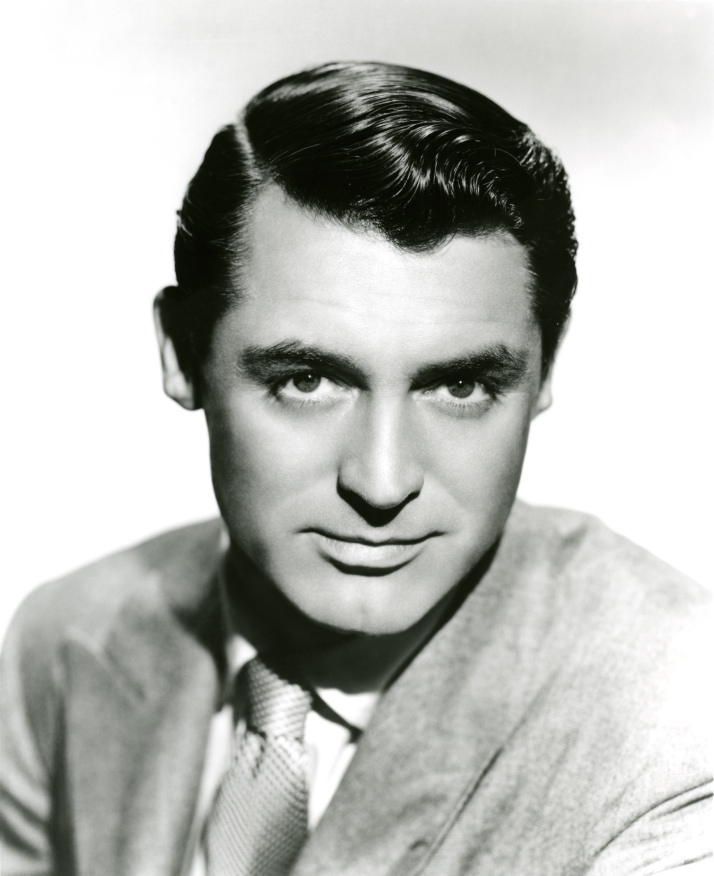

Cary Grant


Henry Fonda


Katherine Hepburn


Peter Lorre


Marilyn Monroe


Gregory Peck


John Wayne


Orson Welles


Scratched off:


Peter Lorre
As John noted in his original list, Lorre became the go-to-guy for villains and sidekicks. He is certainly one of the greatest character actors the world of movies has ever seen. However, he often wasn't one of the biggest stars in his own films. While it is true that us movie buffs know all about him, he's the kind of actor most people know they've seen "somewhere" before, but may not be able to pinpoint where. They certainly don't know his name. Is he an essential actor? Most definitely. Is he one of Classical Hollywood's biggest stars? No.


Penciled in:

James Cagney
For starters, Cagney is credited by many as giving birth to modern acting. None other than Orson Welles called him "maybe the greatest actor to ever appear in front of a camera." In Hollywood's transition from silent films to talkies, he was a giant cog, giving some of the first powerhouse performances of the sound era. His list of iconic roles is as long as my arm. As an added personal bonus for me, what he accomplishes in The Public Enemy and White Heat still blows me away. Any list of the era's finest must include Mr. Cagney.


Since we're talking Classical Hollywood, there is only one thing for me to do. That's passing the baton to Josh of The Cinematic Spectacle.

Wednesday, March 30, 2011

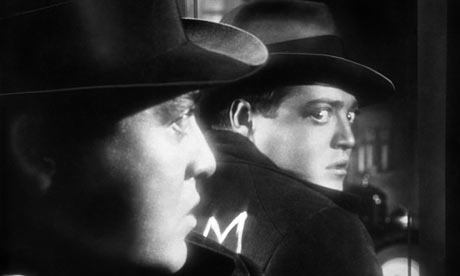
M

Directed by Fritz Lang.
1931. Not Rated, 117 minutes. German.
Cast:
Peter Lorre
Otto Wernicke
Frau Beckmann
Inge Landgut
Theodor Loos
Rudolf Blümner
Georg John
Ernst Stahl-Nachbaur


A child murderer has been terrorizing the town for quite some time. Everyone is on edge. The police are working day and night on seemingly never-ending shifts to find the killer. Still, children keep disappearing. Honest citizens become suspicious of one another. Dishonest citizens are upset that added attention from the law is hurting their businesses. Our killer taunts the authorities with letters to them and to the press. Yet, he remains undetected.

What follows are multiple and exhausting investigations that come to run simultaneously. We see the police using every available tool to apprehend the murderer and try explaining themselves to an impatient public when they don’t. Criminals have meetings to decide how they will deal with the situation. The task of catching the guilty party saturates every second of every day.

From time to time, we get to see this monster for ourselves. Though those around him know nothing, his identity is no mystery to us. We get to know what triggers his most heinous actions and how he operates. Before it’s all over, we hear his explanation. It’s a plea for sympathy. However, he is not only pleading with those in the movie. He’s also pleading with those watching.

That the killer is caught is not a spoiler. Indeed, it eventually becomes a mere matter of time before he is. The real question becomes who will catch him and what will they do with him. In most films, his capture would serve as our climax. Here, it is the axis that turns our tale. This is what makes M special. Even now, 80 years since its release, it refuses to be strait-jacketed into cliché. It still has the strength to go beyond the point where most pictures quit. Those movies are content to leave us with the tidy, happy ending. M is not. It has questions to ask you. It wants to know what you believe in.

Thursday, December 9, 2010

20,000 Leagues Under the Sea


Directed by Richard Fleischer.
1954. Not Rated, 170 minutes.
Cast:
Kirk Douglas
James Mason
Paul Lukas
Peter Lorre


Prof. Arronax (Lukas), Ned (Douglas) and Conseil (Lorre) sail around the world in the world's first submarine, thought by the rest of civilization to be a sea monster, as guests/prisoners of Cpt. Nemo (Mason). Based on the classic Jules Verne novel. Fans of the book will like that its pretty faithful to the source material. That's a major plus as it doesn't try to fix what isn't broken. It just tells the story pretty much the way it was intended to be told. It's also an early 1950s version of a big budget special fx flick. In that regard, its not bad as the fx are excellent for their era and haven't aged nearly as much as you would think going in. That said, the backdrops have. It is so obviously shot in a studio it can be hard to buy into the illusion these people are really sailing around the globe. Admittedy, that's a strange thing to say when this movie won the Oscar that year for Best Art Decoration & Set Decoration. Still, the solidly adapted screenplay and excellent acting keep us invested enough for it not to be a deal-breaker. Kirk Douglas is front and center among the actors, embodying all that is both good and bad about the movie. His actual performance is excellent the way its written. It makes the movie tick. However, the way its written is problematic. If there is one major drawback it's the same one that haunts Disney to this day. Ned and many grimier moments from the novel, including the overall tone, have been sanitized for mass consumption by children. This means while Douglas' work is great when it stands alone, its lacking when compared to its literary counterpart, a much more brooding and seething brute. All of this simply means its a pretty good movie but like most, it pales in comparison to the book.

MY SCORE: 7/10