

Dell slaves over a hot Blu-ray player for the good of mankind.
Showing posts with label Mothers. Show all posts
Showing posts with label Mothers. Show all posts
Friday, November 23, 2018

Wednesday, June 13, 2018

Friday, November 20, 2015

Friday, July 3, 2015

Sunday, May 10, 2015

Wednesday, April 29, 2015

Wednesday, April 1, 2015

Friday, October 3, 2014
Carrie (2013)

Directed by Kimberly Peirce.
2013. Rated PG-13, 99 minutes.
Cast:
Chloe Grace Moretz
Julianne Moore
Gabriella Wilde
Ansel Elgort
Portia Doubleday
Alex Russell
Judy Geer
Zoe Belkin
Karissa Strain
Connor Price
When I heard they were remaking Carrie, the horror classic from 1976, I wasn't the least bit surprised. I wasn't uspet, either. I have a few reasons. First, and foremost, its themes are timeless. This isn't some purely 70s flick that would have to be stripped and rebuilt to fit the twenty-first century. We're talking bullying, self-esteem, mother-daughter relationships, and revenge. Nothing dated here at all, aside from the clothing. That brings me to the other reason I didn't mind. A new version will bring Carrie to people who might not seek out the original simply because it came out before they were born. The only question is would it be botched, or not. The answer is yes...
and no.
Where it works is in the tone it's going for. The setup is essentially the same as the original, but the execution is different. Carrie (Moretz) freaks out in the shower at school when she gets her very first period and her classmates respond by pointing, laughing, and trying to stone her to death with tampons. She also learns she has telekinesis, the ability to move things with her mind. The '76 version plays up the idea of young women blossoming sexually and having that filter throughout the rest of the movie. This time around, we go for a straight horror vibe with some actual sex thrown in. Well, not actual, but you get the picture. Everything is immediately somber and scored with ominous music. It's also purposely drab. Carrie's mom Margaret (Moore) speaks in a hushed voice and our bullies are mean about the way they go about being mean. Let me explain that last sentence. In the original, the bullies certainly did awful things to Carrie. However, they went about their business in a jolly manner. They often made us laugh. Here, we get none of that. It's all dead serious to them.

A lack of humor is just one of many differences between this movie and its predecessor. Not only is it apparent in our bullies, but more importantly, in Carrie's mom. The role is played so outlandishly by Piper Laurie in the original, it becomes sublime ridiculousness. It is difficult not to see it as satire. She also has a domineering presence. The iron fist with which she rules is clearly evident. We sense that Carrie fears her mother with every bone in her body. Laurie's performance is simultaneously a pointed jab at over the top religious fanatics while making an effective one, herself. She's a woman who knows that without a doubt that she is empowered by God to do the things she does. Julianne Moore's take on the same character in the remake is almost the exact opposite. She speaks softly, often appearing even meeker than her daughter, cowering in the presence of others. There is no humor in watching a woman who is completely vulnerable and saddened by this fact. Even her outlook on religion feels different. Where Laurie is absolutely empowered by her faith, Moore's Margaret seems to approach it from a place of weakness. She's not a tall standing soldier in His army, but a flower wilting in His presence. Her only hope is that she's repented enough to not be punished for past indiscretions. This is a dramatic difference. It changes the dynamics of her relationship with Carrie to the point where it doesn't quite work. Where the original Margaret is commanding of Carrie's every move, this one seems to be pleading with Carrie to maybe find it in her to attend a church service or two. This makes it harder to believe that she would still take the same steps as the other Margaret at the end of this movie.
Without directly comparing it to the original, this version of Carrie still doesn't quite work. Carrie herself doesn't feel quite fragile enough to pull this thing off. For starters, she's standing up to Mama way too soon. When we get to that all-important prom scene she's less like a person who just snapped and couldn't take it anymore, and more like one who is simply vindictive. It's like she's been waiting for this moment her entire life. Take note of the pause in the climactic scene with her mother. It's one, maybe two seconds of film, but gives the scene a totally different feel than the same scene in the first movie. It feels like something this Carrie has just been itching to do. Spacek's Carrie just has an instinctive reaction to a heightened situation. Another issue is Carrie's classmates. Right from the start, one character is far too remorseful of her actions toward Carrie in the opening scene. This removes lots of mystery from the movie and it doesn't quite feel like the entire school is really against her. Too many people are in her corner for us to feel the need to be there.
Like I said in the beginning, I really don't mind that Carrie was remade. I just think director Kimberly Peirce's approach to the material was a mistake. Trying to make it a straight horror flick doesn't really work. The original was not that. It was a movie that used teen angst and religious commentary in service of a twisted sense of humor that culminated in two fantastic horror movie scenes. It seems she mistook those non-horror elements as ancillary components of the film rather than being integral to its effectiveness. The performances she gets from Moretz and Moore are actually pretty good, but misguided as detailed above. On the other hand, the major plus of the film is its look, including a fairly impressive prom scene. However, and you should know my rule by now, a movie with not much besides pretty pictures is not a good movie.
MY SCORE: 5/10
Wednesday, October 1, 2014
Carrie (1976)

Directed Brian De Palma.
1976. Rated R, 98 minutes.
Cast:
Sissy Spacek
Piper Laurie
Betty Buckley
William Katt
Amy Irving
John Travolta
Edie McClurg
P.J. Soles
Priscilla Pointer
I saw Carrie on network TV when I was a kid. I think. I'm not even sure I watched the whole thing. I only remembered two parts. First is the obvious one, pig's blood spilling on her at the prom and her going bananas with her telekinesis. The other was a shot of her with her boobs blurred out. I told you it was network TV, didn't I? In the years since, I've heard and read so much about it, and seen that prom clip so often, I feel like I've watched it a dozen times over. Now it was time to put a face to the voice. Time to match the movie with all the articles and reviews I've read. Time to watch Carrie for the first time. Again.
After a decidedly unathletic volleyball game, our story actually starts in the girls lockerroom. It's filmed in slow motion with lots of naked girls frolicing about, steam everywhere, and Carrie White (Spacek) suggestively soaping herself down in the shower. I thought I'd mistakenly slipped in a Playboy video. I almost hit the open/close button on my DVD player to check it out, but we arrived at the point of this scene. Carrie gets her period for the very first time. Somehow, she's totally clueless about what's happening to her and freaks out, to put it mildly. What do all of her sensitive and caring classmates do? They point, laugh, and pelt her with as many tampons as they can yank out of the dispenser on the wall.

At home, things aren't any better. Her mom Margaret (Laurie) is a religious zealot whose never taught her anything about the female body. Mom takes Carrie's period as a sign that the girl is now a sinner. She literally drags Carrie by her hair into a tiny broom closet and locks her in there to pray. By the way, this room contains the creepiest version of the crucifix you'll ever see. Just remember what it looks like. That will be important later. The takeaway from all of this is that the girls in school get in trouble for their actions, and start plotting their revenge against Carrie. Carrie finds out she can indeed move things with her mind and Mom goes all fire and brimstone every time she speaks.
Horror is not a genre known for tremendous acting. More often than not, it's movies are populated by pretty, but not especially talented people. Every now and again, we get one that is wonderfully performed. Carrie is one of those movies. Sissy Spacek is just spot-on as our troubled heroine. From the moment she finds herself bleeding from where she never has, there is an unquestionable innocence about her. As viewers we instantly identify not with her, but with gym teacher Ms. Collins (Buckley) who wants badly to protect Carrie, help her blossom into a well-rounded young lady. Both women are phenomenal in their roles. By the way, Ms. Collins slaps the holy hell out of a student and everyone just rolls with it. My, how times have changed. We also get nice turns from a pre-Grease John Travolta and a very young Nancy Allen as our villains on campus. Oh, and if you remember lots of the women you've seen over the years who have always appeared older and played someone's mom, see if you can spot a young Edie McClurg in a bit part. Nope, I'm not telling who she plays or where you should know her from.
Other than Spacek in the lead, no one in the cast even comes close to the work done by Piper Laurie as Carrie's mom. Her performance is so purposely and perfectly ham-fisted she literally makes the movie. I know, the prom scene doesn't involve her whatsoever and is one of the most iconic moments in the annals of horror. However, that scene only takes care of half Carrie's problem. The other half is waiting for her at home. As the Oscars both Laurie and Spacek were nominated for suggest, they totally sell it.

The bonus for me is that the interactions of mother and daughter, particularly mom's reactions, illuminate the prism through which I see and "get" this picture. I do this differently than most people, but hear me out. General consensus says that Carrie is a classic horror flick, one of the all-time greats. I don't see it that way at all. Don't get me wrong, I actually love this movie. I'm just not so sure it's actually horror. Certainly, there are plenty of horror elements in play, but I'm still not sold. Granted, I'm not a female with terrifying memories of her first period. Still, the movie never really tries to scare the viewer. It goes out of its way to create sympathy for our heroine, but it never puts fear in our hearts. This brings me back to Carrie and her mom. Everything between them is way over the top, in a good way, but still over the top. It seems as if director Brian De Palma is taking great pains to make sure we understand the absurdity of it all. Carrie is innocent, almost to the point of being infantile while Mom is a stark raving lunatic. Then the overall tone is not really dreadful, but sad. The whole thing strikes me as a rather brilliant jet black comedy. It's far more interested in skewering religious fanatics and blasting the high school social class system than frightening us. I certainly laughed at a number of things it seemed were being used as jabs at its targets. It does this throughout whereas the horror portion only includes the last three scenes of the movie.
None of this is to suggest Carrie is any less of a movie than it's been hailed. In fact, viewing it as intentionally and subversively humorous, which I believe it is, makes it an even greater achievement than approaching it as something that's supposed to be either scary or disturbing. The parts that are disturbing are so in relation to what it says about the segments of society it holds its mirror up to. Incidentally, the areas covered: a girl's first period, her relationship with an overbearing mother, narrow-minded points of view, and bullying are timeless. Therefore, the movie might look dated because of fashion and hairstyles, but it doesn't feel that way.
Sunday, May 11, 2014
Happy Mother's Day 2014

Happy Mother's Day to all the moms that happen to drop by today!!!
Over the years since I've been blogging, I've given my two cents on a number of movies that deal with motherhood (and grandmotherhood!). There have been some good moms and some bad ones. There have even been good moms in bad movies and bad moms in good movies. Below are the most recent movies I've reviewed that deal with the subject, in reverse chronology of when I posted the full reviews. You can read those reviews by clicking on the corresponding titles. Sorry, rambling...here we go...






Saturday, May 3, 2014
Elena
Directed by Andrey Zvyagintsev.
2011. Not Rated, 109 minutes.
Cast:
Nadezhda Markina
Andrey Smirnov
Elena Lyadova
Aleksey Rozin
Evgeniya Konushkina
Igor Ogurtsov
Igor Yurtaev
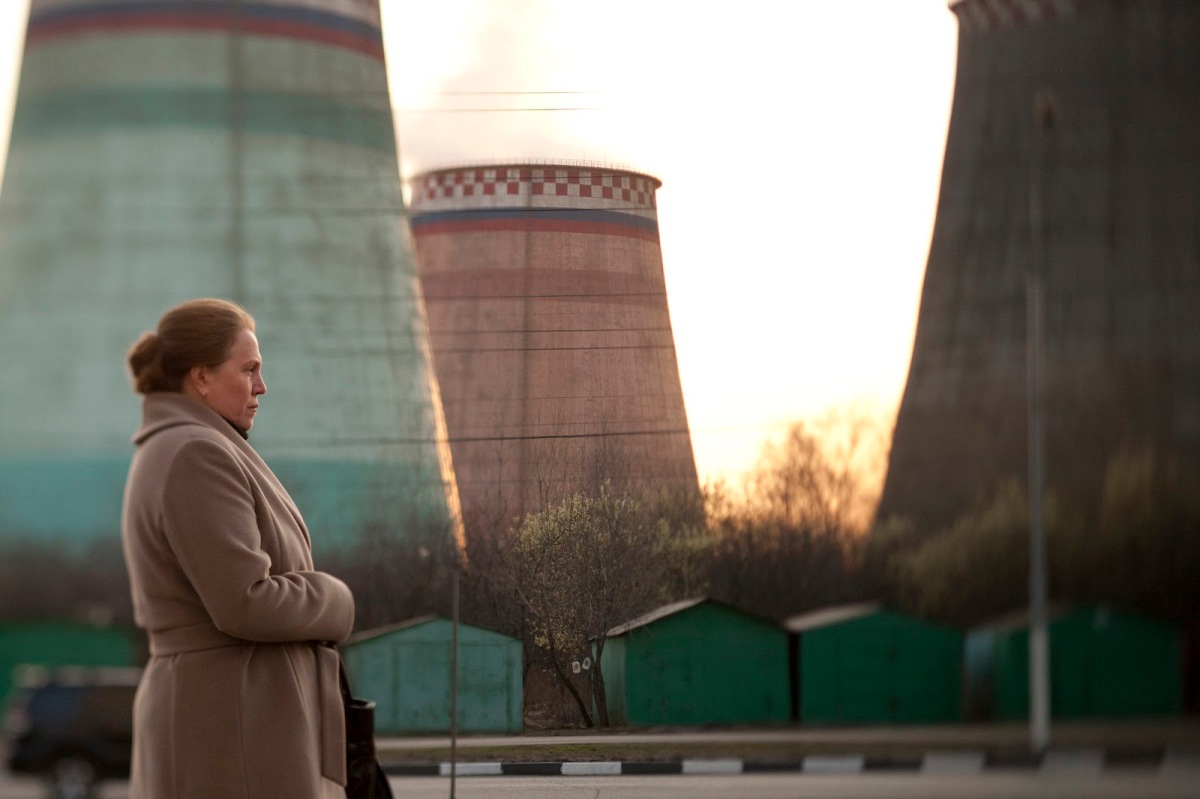
Elena (Markina) is a retired nurse in her sixties. She has been married to the wealthy Vladymir (Smirnov) for 2 years. Their life together is fairly mundane, driven by routine. They get along fine and stay out of each other's way. In fact, they even sleep in separate beds. This movie isn't about that. After all, we find out they do still have the occasional roll in the hay. This is about the one real point of contention in their relationship: Elena's son Sergey (Rozin). Sergey is married with a couple kids. He also hasn't worked in who knows how long and is constantly asking his mom for money. In turn, Elena usually has to ask Vladymir. After grumbling and objecting, Vlad usually forks over the cash. Sergey is aware of all this and his latest request is a doozy. It concerns his oldest child who has botched his schooling so bad it seems the military will be his only option. Not wanting that, Sergey asks mom for enough money to basically by his son's way into college. When Vlad gets word of this, he puts his foot down. However, after his wife begs and pleads, he says he'll think about it some more and give her an answer in a week. The next couple weeks ensue.
The director goes out of his way to create the feeling that we're really traveling through Elena's life with her. He does something in a way most movies haven't the courage to try. For instance, right at the beginning we witness her wake to her alarm, contemplate moving for a moment or two, stretch, go put some tea on, enter her husband's bedroom, yank the curtains apart, wake him, etc. When she leaves to go visit Sergey and his family we watch her walk down streets, stop at the store, and so on. It sounds tedious, and for some viewers it will be, but the way the director edits it her day feels like a journey to a coveted destination. The wonderfully subtle performance by Nadezhda Markina bolsters that feeling. She doesn't sprint from place to place, but she certainly moves with purpose. She has given herself a schedule. Anything that throws it off bothers her. It is no surprise that she is clearly upset when the store clerk has to call for assistance. This establishes who she is - an orderly person who is devoted to those she loves.

Great pains are also taken to establish Vladymir and his relationship with Elena. Though he's wealthy, undoubtedly having worked all his life, and stubborn, he is now someone who must be cared for. We rarely see him actually moving. It's a bit of a struggle when he does. He trudges from his bed to the bathroom. The one time we see him extend himself he has a heart attack. Both before and after this, he seems to spend most of the day in bed with Elena bringing him meals and cutting off the television when he falls asleep. To carry his feebleness a step further, the director does something really interesting that could easily have wound up on the cutting room floor. A few days after Vlad's heart attack we see Elena wheeling him out of the hospital room for the final time. Instead of immediately cutting to whatever is next in their lives, we stay in that room. The nurse comes in and assumes Elena's role for the rest of this scene by preparing it for the next patient. The key is that we understand Elena has little more personal connection to Vladymir than the nurse. She's just cleaning up after him. There exists a distance between them. Remember, they sleep in separate beds. Neither works, but they go their separate ways every day. This distance is likely a major factor in the decision that turns the movie. On the flip side is Vlad's daughter Katya (Lyadova). She's a free spirit. More importantly, she doesn't take care of her father and their relationship is strained seemingly because of this fact. Her name is invoked in conversation often by Elena, who doesn't like her. Why should she? Elena is taking care of the man his own daughter refuses to. Vladymir gets angry when any of this is brought up, but calls for his daughter when he is at his weakest.
This is all a fascinating set up for an intriguing finale. Our feelings about Elena change. The first question is can we understand and/or sympathize with her position? Other questions follow. Do the ends justify the means? Thanks to an at-first cryptic final shot, we have to ask ourselves are the ends truly the end? It could simply be the perpetuation of a cycle. We can also ask ourselves would we do what Elena does? However, the more appropriate question is could we? Making all of this swirl around in our head is the genius of this movie. It goes about its business in a rather ho-hum manner. This makes it a slow burn rather than a heart pumping burst of energy. Those of us without much patience might dismiss this film too soon. After all the morning routine dominates the first act and things like it routinely occur. None of it immediately stands out as remarkable. The things that break that routine stand in stark relief, drawing attention to both. However, they don't happen at all rapidly, making it easy to tune out early. That would be a mistake. Elena is a movie that requires you to put on your thinking cap, but is not complicated. Just stick with it.
Wednesday, October 9, 2013
Mama
Directed by Andrés Muschietti.
2013. Rated R, 100 minutes.
Cast:
Jessica Chastain
Megan Charpentier
Isabelle Nélisse
Nikolaj Coster-Waldau
Jane Moffat
Daniel Kash
Javier Botet
David Fox
Hannah Cheesman
Some rather unfortunate events leave two little girls alone in a cabin deep in the woods to fend for themselves. Five years pass until they are discovered by a search party working for their uncle Lucas (Coster-Waldau). It is miraculous that they've survived but, as expected, they’re severely damaged to the point of being animalistic. Victoria (Charpentier), now eight years old, and six year old Lilly (Nélisse) have subsisted on a steady diet of cherries and raised themselves. Sort of. After some intense therapy, Uncle Luke takes the girls in. Also living with him is his girlfriend Annabel (Chastain). The girls are coming along, Victoria much faster than Lilly, but are much more apt to obey Mama, a mysterious figure they often refer to that seems to live in their bedroom closet but no one else has seen. Adults trying to figure who and what Mama is while she/it makes things go bump in the night, and occasionally during the day, ensues.
Thankfully, instead of going the found footage route, Mama is an old-fashioned ghost story. It employs some new-fangled technology, to be sure, but the frights it tries to provide are from an era long since passed. It forgoes the gore in favor of an inferred presence, an ominous score and jump scares. Through these means it creates a foreboding atmosphere that it refuses to turn loose.

Our uneasiness is fostered by a sufficiently worried performance from Jessica Chastain. She provides the audience with a capable conduit as she often voices our feelings on the matters at hand and is the one character rounded just enough for us to care for. That being the case, she highlights the movie’s biggest problem. We have a pretty good idea of what each character is going to say or do, provided we've seen a scary movie or two. Annabel is someone to root for, but isn't really that intriguing. Uncle Lucas gets hurt early on and spends most of the movie in the hospital so he has nothing to do until the finale. Other characters only show up from time to time to explain the plot to us or to die because, you know, horror flicks need that sort of thing. Therefore, all we’re left with is that dread inducing music littered with abrupt noises to startle us.
Early on those old school tactics work pretty well, but they eventually lose power. The story is too paint-by-numbers to sustain the level of terror necessary to keep us truly locked in. Once the legend of Mama first starts to unfold it feels really familiar to us. In fact, it’s not terribly different from The Woman in Black. In short, once we know what’s coming we start to pick it apart. To it’s credit, Mama holds us as long as possible and is, at times, enjoyable. It’s just not quite good enough to stick.
Thursday, March 7, 2013
Brave

2012. Rated PG, 93 minutes.
Cast:
Kelly Macdonald
Kelly Macdonald
Julie Walters
Craig Ferguson
Kevin McKidd
John Ratzenberger
Once upon a time, there lived a princess with an unruly mane of shocking red hair. Her name is Merida (Macdonald). One day, when she is still a very little girl, a ravenous bear known as Mor’du attacks their village. While Merida is whisked away to safety by her mother, Queen Elinor (Thompson), her dad, King Fergus (Connolly) stays behind to fight the animal off. He’s successful, but loses a leg in the process. Cut to Merida’s teenage years. Much to the Queen’s chagrin, Merida has no interest in being a dainty little princess. She really doesn’t care to be married, either. However, the queen informs her that’s precisely what’s about to happen. To whom is the only thing yet to be decided. Three young suitors will come to their home and compete to win her hand. None too pleased with this turn of events, Merida takes matters into her own hands.
After that set up, which takes great pains to show how diametrically opposed the princess is to the queen, we get a fun and occasionally harrowing tale of mother/daughter bonding through girl power. There are some fun action scenes involving archery and/or bears. The story between them holds together quite nicely and includes a few gut-wrenching moments. These happen when we realize the queen may be losing to her affliction and what’s in her future is not pretty.
Brave is also a beautiful looking film. Beginning with our heroine’s expertly rendered hair, it’s a wonderful mix of photo-realistic scenery and cartoonish people. Nearly every frame has a touch or two that are a treat to lay eyes on. This is especially true of any scene involving water. If I didn’t know it wasn’t real, I’d hesitate to say it’s not the genuine article.
Where Brave falls short is in the humor department. Many of the attempts to make us laugh simply fall flat. We get a couple nice chuckles but they are few and far between. The big issue seems to be that all the jokes are telegraphed. There is almost no element of surprise to them, save for some unexpectedly bare buttocks. It’s mostly stock humor rehashed from other kiddie flicks.
Despite some unfunny “funny” stuff, Brave is a very pleasant watch. There are some amazing visuals and a few solid action scenes to go with its fairy-tale. Admittedly, things can get a little predictable and occasionally sappy, but not to an unbearable degree. It’s not quite the masterpiece we’re used to getting from Pixar, but still a very nice effort.
Wednesday, February 20, 2013
The Queen of Versailles

Directed by Lauren Greenfield.
2012. Rated PG, 100 minutes.
Cast:
Jacqueline Siegel
David Siegel
Richard Siegel
Virginia Nebab
Alyse Zwick
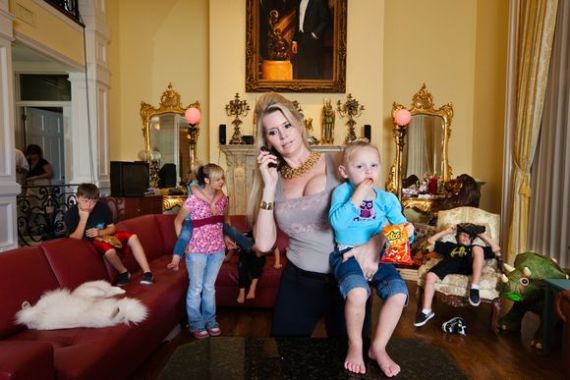
We meet 70-something year old David Siegel, his 40-something year old wife Jackie and their eight kids at their Orlando, Florida home in 2007. He is the king of an empire known as Westgate Resorts, the largest seller of time-share vacations in the world. He even claims personal responsibility for getting George W. Bush elected in 2000. It may not have been altogether legal, in his own words. As kings of empires usually are, he is also filthy stinking rich. He’s so wealthy, he is in the midst of building the largest single family private home in the United States, a 90,000 square foot behemoth he and his wife have dubbed Versailles. He estimates it will cost him about $100 million to complete. His company has also just built the biggest hotel on the famous Las Vegas strip. His eldest son Richard, (not by Jackie and appears to be about her age), runs it. Jackie is a stay-at-mansion mom who goes to expensive charity luncheons. Calling her a mom might be giving her too much credit as a team of nannies and housekeepers do most of the work. Jackie also shops. A lot. Life is good.
As you should know by now, a few short months later the bottom falls out of America’s economy. Since most of his customers begin tightening their purse strings Westgate is hit hard. To oversimplify, while what Westgate sells is physically manifested in vacations for their customers, on paper they’re sub-prime mortgages. David is hemorrhaging money and laying people off left and right (including most of his at home help) while desperately trying to save his business as a whole. In particular, he wants to save the hotel which is in serious danger of going into foreclosure. The completion of Versailles is also put on hold. Of course, all of this is a strain on the Siegel marriage as David grows ever more ornery and Jackie, not always kept in the loop, begins to feel alienated from her husband and is also stressed about the situation.
Jackie gets most of the focus, hence the movie’s title. To her credit, she maintains a healthy sense of humor about the whole thing. She slowly realizes how out of touch she and her children are. She tries to ratchet down some of her lavish habits but can’t quite keep it under control. For instance, a trip to Wal-Mart (probably a first) turns into a couple thousand dollars just in toys. With only four in-house employees, down from 19, to deal with her, David, their 8 kids, and I don’t know how many pets, things get pretty nasty around the mansion. Yet somehow, Jackie emerges as a sympathetic figure. Perhaps her husband becoming a rather grumpy old man gives us more empathy for her.
A bad break for not only the Siegels, but the entire country in the form of a recession turns out to serve this film really well. I’m guessing, they signed up to do this documentary as a way of showing off their extravagant (gaudy) lifestyle, a pat on their own backs for making it ridiculously big. If they had their way, it was going to say “Hey, look at how rich we are and watch us build our palatial estate.” Not to bash the wealthy but that would’ve been hard to twist into a narrative that was interesting to anyone. Real life intervened and gave us a plot. We get to see people go through a range of emotions, both good and bad. We see a change in the way they interact with one another. There is substance and even sadness in watching their family fortune deteriorate. Saddest of all, director Lauren Greenfield appears to have gotten it right judging by David’s reaction to the film. He and his family do not come across as well as they probably thought they would. After all, when filming started he was a billionaire with no end to his fortune in sight. At the film’s end he’s not exactly broke financially, but his spirits appear to be. He’s now suing Greenfield for $75 million for defamation of character. I’m not sure how he can win. Well, maybe he’ll win on Oscar night for Best Documentary. I don’t think he’ll enjoy that because then his loss will literally be someone else’s gain.
Wednesday, February 13, 2013
What to Expect When You're Expecting
Directed by Kirk Jones.
2012. Rated PG-13, 110 minutes.
Cast:
Cameron Diaz
Jennifer Lopez
Elizabeth Banks
Brooklyn Decker
Anna Kendrick
Dennis Quaid
Ben Falcone
Rodrigo Santoro
Chris Rock
Rebel Wilson
Thomas Lennon
Wendi McLendon-Covey
Chace Crawford
Cast:
Cameron Diaz
Jennifer Lopez
Elizabeth Banks
Brooklyn Decker
Anna Kendrick
Dennis Quaid
Ben Falcone
Rodrigo Santoro
Chris Rock
Rebel Wilson
Thomas Lennon
Wendi McLendon-Covey
Chace Crawford
If you’re eternally optimistic like me, or not, and have children you’d expect to laugh during a movie that bills itself as “laugh out loud funny for any parent!” Trust me, it does. Says so right on the back cover of the DVD, exclamation point included. Sadly, this may be the best joke involved with this movie, even if it is on me. My mother was right. I’m too gullible. She warned you couldn’t always depend on the goodness of Mankind or of advertising geeks who work for movie studios.
Unlike the blurbs occupying real estate on its cover, the title What to Expect When You’re Expecting is accurate. After all, we do meet a handful of women who will very shortly be expecting. By the way, this movie is based on the best-selling advice book of the same name. That probably should’ve been a warning. Anyhoo, we then journey through pregnancy with the soon-to-be mamas. In short order there’s the fitness guru/reality tv star (Diaz), the pregnancy expert who’s never been pregnant (Banks), the photographer who can’t get pregnant (Lopez), the girl who runs a food truck (Kendrick) and the NASCAR trophy-wife (Decker). Other than Banks and Decker, these ladies have nothing to do with each other. Well, almost nothing. At some point, they cross paths with each other in the most brief and contrived ways possible but still don’t get involved in one another’s stories. No, the scene in the pic above never happens.
However unrelated they may be, they do have something in common besides swollen bellies. Not one of them is the least bit funny. Almost none, but we'll get to that. Part of the problem is these women are not all that likeable. They’re self-absorbed mongers whose pregnancies have little to do with the circle of life. Instead of nurturing bundles of joy they seem to be incubating accessories - assets in one’s portfolio or validation of self-worth, and so on. Most galling, one is merely a depressing plot point in a budding romance.

None of the actresses turn in memorable work, either. Elizabeth Banks fares best and is part of the funniest, most heartfelt and oddest scene. Lopez does her best to look constantly forlorn. Diaz’s Jillian Michaels impression is meant to be a hilarious parody but fails miserably at the hilarious part. Finally, Decker seems to be channeling Jaime Pressly making me wonder why they didn’t just get the real thing. For the most part their men blend seamlessly into the background. The normally unexciting Dennis Quaid plays Decker’s husband/racing legend and stands out simply because we’re positive he has a pulse. And yes, since this is a “zany” comedy everyone will go into labor at precisely the same time. Gee, without me you never would’ve guess…who am I kidding? You knew that was a sure bet as soon as the second lady turned up in a family way. I confess, there is one exception. J-Lo literally takes the Angelina Jolie route to family expansion. Even that wraps itself up right on cue. Sigh.
Sideline players fare ever-so-slightly better. Rebel Wilson is mostly just there but elevates the Banks scene I referenced earlier. Wendi McLendon-Covey hits with a few zingers during her limited time on-screen. Most consistently amusing is the group of fathers who walk together in the park, kids in tow, led by Chris Rock and Thomas Lennon. They aren’t “laugh out loud funny for every parent,” but they’re a welcome reprieve from all the hand-wringing and failed humor of the major storylines. None of this is enough to salvage this heap. What to Expect is a classic case of a talented ensemble given nothing to work with and going through the motions.
Wednesday, January 23, 2013
A Cat in Paris

Directed by Jean-Loup Felicioli.
2012. Rated PG, 70 minutes.
Cast:
Steven Blum
JD Blanc
Anjelica Huston
Phillippe Hartmann
Matthew Modine
Gregory Cupoli
Lauren Weintraub
Dino is a cat that lives in Paris, hence the title. During the day he is under the care of Zoe (Weintraub), a little mute girl that that loves him deeply. Dino brings Zoe any dead creatures he can carry as a token of his appreciation. Zoe lives with her recently widowed mother Jeanne (Harden), a police officer specializing in catching bad guys and absentee parenting. Therefore most of her daughter’s time is spent with Claudine (Huston), the nanny. Oddly, the cat sneaks out of the house every evening and returns in the morning. The others know she leaves but haven’t a clue where she goes. We know that she goes across town to hang out with Nico (Blum) and accompanies him on his nightly burglaries. Eventually in the picture is Costa (Blanc), a ruthless art thief. We’re told he’s the one who killed Zoe’s father. The girl has not spoken a word since.
The seemingly separate strands of our plot are quickly established and work toward each other at a wonderful pace. The early scenes don’t dawdle endlessly, they make their point in a concise manner and provide us with neat foreshadowing. The whole thing is barely an hour long, a testament to its efficiency.
Efficiency without heart is a death knell for a movie. Luckily, this one does indeed have both. We can’t help but feel sorry for Zoe. Her mom is incessantly pre-occupied and her nanny seems well-meaning but can’t take the place of a child’s mother. Other than Dino, she has no friends and is having major trouble coping with her father’s death. Later, we project ourselves onto Nico and the relationship she develops with him.

Of course, with a cop and a bunch of criminals around, there’s bound to be some action. Most of it is back-loaded into the final act. Before this, an intriguing police procedural is well-mixed into a story that’s full, but not cluttered. Each section of the tale feels to be an organic part of the whole. There is some contrivance to get Costa into the story, but once in he’s so much fun we’re okay with it.
Another interesting aspect is the animation. Hand drawn, it’s less concerned with being a photo-realistic representation than it is with conveying feelings. For instance, Nico is a burglar and has to be sneaky therefore, he moves fluidly, snake-like. Costa, on the other hand, is a brute with a gang of henchmen. He moves accordingly. It may sound strange to say this about such an old style of storytelling but it’s a breath of fresh air among all the computer animated fare out there. Likewise for the storytelling on display. It sets a brisk pace and doesn’t pad its runtime with extraneous exposition and over-manipulation. It doesn’t beg you to keep up because it’s secure enough to know that you will. The ending leaves some loose ends but we’ve had such fun watching, we don’t really mind.
Monday, November 19, 2012
We Need to Talk About Kevin

Directed by Lynne Ramsay.
2011. Rated R, 112 minutes.
Cast:
Ezra Miller
Jasper Newell
Ashley Gerasimovich
Siobhan Fallon
Alex Manette
James Chen
The last sixteen years have been a living hell for Eva (Swinton). Things don’t appear to be getting better. She spends most of her days agonizing over what has happened during that time which culminates with her teenage son Kevin (Miller) in jail. She lives alone in a shabby little house that’s a wreck, both inside and out and goes to visit her boy quite often. The two mostly sit across a table and stare at each other. They don’t seem to be mother and son so much as they do a pair of adversaries inextricably stuck with one another and forced to behave. Through flashbacks we see pretty much Kevin’s entire life. It does indeed seem as if he’s hated her literally from day one of his existence. Soon, the feeling becomes mutual. However, realizing that a mom shouldn’t feel that way about her boy she continues to give her relationship with him the old college try. Unfortunately, the boy just seems evil.
It’s clear right from the beginning that Kevin has not just
committed a crime, but done something especially heinous. It’s so bad
that Eva is shunned by everyone in town. One lady even has enough gumption to
punch her in the face and call her names as they pass each other on the street.
For what it’s worth, Kevin doesn’t seem the least remorseful about anything.
Didn’t I say he’s evil.
When I say evil, I don’t mean it in the way we normally
think of when talking about horror flicks. Kevin isn’t possessed by some
revenge-seeking demon or a host for the devil. He just seems to be a bad kid
from the start. This dredges up the old nature vs. nurture argument. Was he
born rotten or did life spoil him?
Truth told, We Need to Talk About Kevin
isn’t actually categorized under horror. I’ve seen it called a psychological
thriller, a drama and/or a suspense. Though it has elements of all of those, I
wouldn’t say any of those descriptions is truly fitting. I would say it has as
much, if not more, in common with fright flicks as anything else. It’s a horror
made all the more unsettling because we’re too familiar with both the familial
situation and the situation Kevin creates. It could be happening next door. The
potential for this story to spring to life right before us, as it too often
has, is far scarier than the prospects of some boogeyman in a dingy, tattered
get-up disemboweling all of our friends while cracking witty one-liners. The
terror comes from the context. That said, it’s not a movie you’d be pressed to
watch alone in the dark. The sinking feeling it gives us has nothing to do with
what might be lurking about just beyond our field of vision. It comes more from
what we can plainly see but may not be willing to believe.
No matter which box we try to put it in,
WNtTAK is unconventional. It, along with Eva seems to
exist in a near constant dream like state like they’re both incredulous as to
how things have turned out. There really is no plot, just the endless pain of
her existence as flashbacks and current events alternate screen time. The other
is never far from thought.
While the thematic occurrences are intriguing, they would be
a hard sell if not for the amazing work turned in by Tilda Swinton. She’s
perfectly perplexed at the mess her life has become. Not to be outdone are the
three gentlemen handling the role of Kevin. While Miller handles the role in
its final incarnation amazingly, he receives a great setup from the tykes who
handle the younger versions. In particular, Jasper Newell, who plays Kevin
between ages six and eight is remarkable. The two boys complement each other
extremely well making for a seamless combined portrayal.
The pacing is a bit slow and the score, while moody, isn’t
terribly exciting. This makes it a difficult watch for some. Regardless of
which genre you think this belongs, you’re in the wrong place if you’re looking
for a mile-a-minute popcorn flick. There is nothing wrong with those kinds of
movies, I love plenty of them. However, they’re fleeting and light snacks.
We Need to Talk About Kevin is heavy, stick to your ribs
food.
Wednesday, November 7, 2012
Sparkle (2012)

Directed by Salim Akil.
2012. Rated PG-13, 116 minutes.
Cast:
Jordin Sparks
Whitney Houston
Carmen Ejogo
Tika Sumpter
Brely Evans
Michael Beach
Cee Lo Green
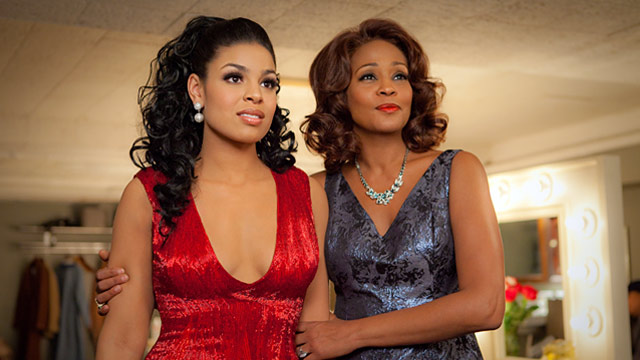
Sparkle (Sparks) is a songwriter with stage fright. Since
she still wants her music to be heard, she recruits her oldest and most brazen
sister named Sister (Ejogo), no less, to take a bus across town and sing her
songs at a nightclub. Eventually, the girls meet up with Stix (Luke), a budding
promoter. With dreams of making them into the next Supremes, by the way this is
1968, he recruits their middle sister Delores and transforms the trio into a
girl group. He then begins getting them work all over Detroit in hopes of
making it big. Even though the girls are grown, Sparkle is the youngest at 19,
all of this requires repeatedly sneaking out the house of their tyrannical
mother Emma played by Whitney Houston in her final feature film before her
death in February of this year. Yes, this is a remake of the 1976 ‘hood
classic.
If the title leads you to believe this movie is about
Sparkle, you’re only partially right. We don’t focus on her until the final
act. Honestly, the original did the same so that, in and of itself, isn’t a
major complaint. The difference is the girl’s relationship with their mother
takes center stage in this version while it was only occasionally touched upon
in its predecessor. This moves our title character down to third on the totem
pole. It’s probably just as well. Jordin Sparks isn’t a very good actress so
lightening her load makes some sense.
In the older movie, the mother is a supportive sideline
player. Here, she’s the complete opposite. To make sure we know who’s in
charge, Whitney Houston is in full blown, stark raving mad lunatic warden mode.
You get the feeling the girls have to ask permission to use the restroom or
risk her wrath. She embodies the role well. Sadly, it’s a role that feels
specifically written for her. Emma is a woman who has battled drug addiction along with
the ups and downs of the music business and now wants to protect her daughters
from suffering the same fate, or worse. As she continually rages, it’s
difficult to watch her, listen to the sounds come from her obviously shredded
voice box and not think of her tumultuous real life and the once flawless pipes
with which she serenaded us all. It’s distracting and depressing which makes it
a morbidly effective portrayal.

Also of more importance than Sparkle is Sister. She’s
clearly the most like her mother. Indeed, much of the film’s fireworks are made
up of shouting matches between the two. In the role, Carmen Ejogo gives a
powerhouse portrayal rivaling Lonette McKee’s in the same role in the original.
Sister’s story also contains another excellent performance, albeit from a
surprising source. As comedian Satin Struthers, the movie’s lone unrepentant
villain, Mike Epps turns in what is easily his best work. Though playing a
comic, which is how he started in his real career, he really does bring this character to life and
not just rehash the old Mike Epps schtick.
People who love this movie, and there will be plenty, will
do so on the strengths of the aforementioned performances, the music and
prerequisite ups and downs of high octane melodrama. However, there are serious
problems. Beginning with the second act, the movie shifts into overdrive,
propelling itself forward at breakneck speed. The various strands resolve
themselves suddenly and/or predictably, leaving plot holes in their wake. In
this regard, it pretty clearly follows the Tyler Perry template of filmmaking:
scream, bicker, fuss and fight until an instant moment of clarity, kiss, make
up.
In comparison with the original,
Sparkle also suffers mightily in the charm department.
That one is flawed, but it has a much more genuine feel. The grit and grime of
the Harlem setting infused the characters not only with a sense of urgency
about changing their station in life but also a naiveté about the temptations
even minor success may bring. It also gives us a sense of danger. The same
could’ve been achieved for this movie in Civil Rights-era Detroit. However,
we’re given what feels like a glamorized version of the city wherever the girls
perform. At their nicely sized suburban home they want for nothing tangible and
can retreat from one another in a way the girls in the original could not.
There is a real sense of a unit breaking up as the older movie progresses. Here,
each of the sisters wears their individuality proudly on their sleeve,
weakening both their bond to one another and ours to them. The glossiness of
the sets, flossiness of the outfits and four ladies constantly proclaiming “I
am woman, hear me roar!” mark this effort as falling off the assembly line of
movies aimed at black females over the last decade. Girl power is great and I
generally applaud movies for the attitude but it misses the point of its
predecessor.
MY SCORE: 5/10
Monday, October 22, 2012
Mother's Day
Directed by Darren Lynn Bousman.
2010. Rated R, 112 minutes.
Cast:
Rebecca De Mornay
Jaime King
Frank Grillo
Patrick John Flueger
Shawn Ashmore
Lyriq Bent
Briana Evigan
Deborah Ann Woll
Warren Kole
Kandyse McClure
Tony Nappo
Lisa Marcos
Cast:
Rebecca De Mornay
Jaime King
Frank Grillo
Patrick John Flueger
Shawn Ashmore
Lyriq Bent
Briana Evigan
Deborah Ann Woll
Warren Kole
Kandyse McClure
Tony Nappo
Lisa Marcos
Group A is a friendly crowd. They’re having a boozy fun time at the house of Daniel (Grillo) and Beth (King) to celebrate his birthday. There are nine, in all. Aside from our hosts, there is the young couple, the black couple, the middle aged guy/early 20s chick couple and random single female friend. Everyone is hanging out in the basement. It’s a nice setup: pool table, bar, music on blast – you know the deal.
Group B is not so friendly. Even though they’re very big on family, actually they are family, they’re not the kind you want to hang around. In fact, they’ve just finished robbing a bank. Well, it was a job gone horribly wrong. Johnny (O’ Leary), the youngest of the three brothers is dying in the back seat of the getaway car from a gunshot wound. Ike (Flueger) is the eldest. He controls the other two, somewhat, but the current situation has him a bit frazzled. The middle brother Addley (Kole) is always frazzled. It quickly becomes evident that their mother is the one who really pulls the strings. So it only makes sense that the boys head home to Mother’s (De Mornay) house. They come screeching into the driveway, burst in through the door and shout loudly for their mom. Lo and behold, the boys haven’t been in contact with her in a few months and are unaware that she lost the house due to foreclosure. That’s right, this is where Daniel and Beth live and Group A is hanging out downstairs. Not surprisingly, a hostage situation breaks out and luckily for the boys, there is a doctor is in the house. When they finally get a hold of mom on the phone, she fills the boys in on the house situation and hurries over to get things under control. Of course, Group A realizes that once she walks into the door, things have gotten considerably worse for their chances of survival.
From the moment Rebecca De Mornay appears on the screen we’re pretty much mesmerized. As our main protagonist, she gives a brilliantly odd performance that makes us believe we’re finding out what it would be like if June Cleaver (google her, young’uns) were a homicidal sociopath. She plays the role with unwavering assertion and drops the clichés our own mothers said to us in between giving her boys orders to do some heinous things. It’s a deliciously over the top and wicked performance that transcends many of the film’s weaker qualities.

Thankfully, the movie creates plenty of tension and draws us to the edge of our seats with one outrageous scenario after another. As the movie goes on, the craziness gradually increases until we’re very near the breaking point. The stakes continuously grow as does the violence. Yes, it’s plenty violent and graphically so. Nothing less is to be expected from the same people heavily involved in the Saw franchise. So yeah, this isn’t for everyone.
Mother’s Day also manages to be fun. That’s because there is a thread of very dark comedy running all the way through the movie. It displays the kind of twisted sense of humor that only people with a twisted sense of humor will appreciate. This includes it functioning as a nasty little slice of recession era angst. It’s a remake of an old Troma movie from 1980 of the same name. I haven’t seen that one, but this may make me seek it out.
Monday, October 15, 2012
The Woman in Black
Directed by James Watkins.
2012. Rated PG-13, 94 minutes.
Cast:
Daniel Radcliffe
Sophie Stuckey
Jessica Raine
Roger Allam
Shaun Dooley
Mary Stockley
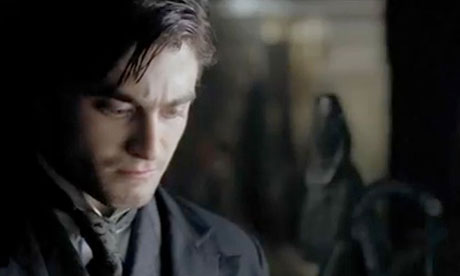
After one of his clients dies, it’s up to Harry Potter, um, I mean Arthur Kipps (Radcliffe) to make sure her affairs are in order. To do so he has to spend some time in her house. Of course, this is a dark secluded mansion no one town wants to go anywhere near. Rumor has it there’s a ghost, or ghosts, hanging around the place. It doesn’t help that the local children suffer violent, fatal and mysterious accidents at an alarming rate. Kinda kills the area tourism industry, you know? Anyhoo, this is all leading to our hero spending a night alone in the spooky abode. Yup, he sees stuff. You’re probably wondering where that title comes from. It seems whenever one of the local rugrats manages to get dead someone sees a woman in a black dress close by.
Our saga unfolds in the most uninteresting way possible. Things clunk along as Arthur receives ominous warnings and then is blamed for stirring things up as the kids keep dying. His one ally is Daily (Hinds), the one guy native to the town who is skeptical of the existence of ghosts. He provides the movie’s liveliest moments. Everyone else just trudges through the picture trying to look scared and/or scary, often failing on both fronts. Our leading man, Mr. Radcliffe, isn’t compelling enough to sufficiently draw us in, at least not here.

The alleged scares are pretty standard ghost story fare. Arthur sees things, gets spooked, takes off running, sees more things, runs some more until he “unexpectedly” runs into a real person. The apparitions he sees come off as innocuous because we know right from the get-go they’re only going after children. Therefore, our hero never seems to be in any real danger. Besides, any tension these scenes might generation is killed by the film’s leisurely pacing. A tale taking its time can be a good thing. That’s not the case here. This is like being stuck behind grandma doing 45 on the highway and no way for you to get around her. It makes the hour-and-a-half runtime feel more like a day and a half.
Thankfully, two scenes manage to drag the movie out of its self-imposed stagnation. Both are rather late in the proceedings, perking us up a bit if we’re still paying attention. One involves a mud pit our guy has to climb into and the other is the final scene. These keep The Woman in Black from becoming a complete travesty. They don’t save the film, but they’re at least interesting.
When it is all said and done, we’ve sat through a sub-standard ghost story with hardly any twists or turns in its narrative. Its visuals aren’t frightening enough to overcome its flaws. For the most part, we aren’t even afforded the cheap thrill of jump scares. Judging by the generally positive response this movie has gotten, I’m probably jaded. I just don’t get it. For me, TWiB is yet another PG-13 horror-less flick.
Subscribe to:
Posts (Atom)