Monday, November 25, 2013

Kinyarwanda

Directed by Alrick Brown.
2011. Not Rated, 100 minutes.
Cast:
Cassandra Freeman
Hadidja Zaninka
Mazimpaka Kennedy
Edouard Bamporiki
Cleophas Kabasita
Hassan Kabera
Abdalla Uwimana
Marc Gwamaka
Mutsari Jean
Kena Onyenjekwe


The Rwandan genocide of 1994 has been, and continues to be, widely documented. It has even made its way to mainstream American cinema with 2004’s Hotel Rwanda which starred Don Cheadle. In case none of this rings a bell, I’ll give you a quick and oversimplified history lesson. People of the two predominant ethnicities in Rwanda, the Hutu and the Tutsi’s were engaged in a civil war. Even though the Hutu comprise a much larger portion of the country’s population, the Tutsi controlled the government for much of its history. However, in 1994, the Hutu had been in power for roughly thirty years. Rebel Tutsi’s organized in an effort to seize power, thus resulting in war. After Hutu leader Juvénal Habyarimana was assassinated, members of a powerful Hutu group known as the Akazu initiated the mass killings of Tutsi’s. Through pointed and unfiltered propaganda, they convinced many that the Tutsi’s aim was to enslave the Hutu and for this, all of them should be exterminated. They openly referred to Tutsi’s as “cockroaches.” Also targeted were any Hutu who opposed these genocidal tactics, were thought to be hiding Tutsi, and of course, those who were married to someone of Tutsi descent. They were labeled traitors. Over a period of 100 days (from early April to mid-July of ’94) men, women, and children alike, often whole families at once, were murdered in the streets, in their homes, schools, churches, and wherever else they might be by Hutu death squads. Many of these squads were part of the Hutu military, but a disturbing number of them were made up of civilians taking up arms against their neighbors. Often, these executions were carried out by machete leaving maimed those who didn’t die from their attack. When it was over, somewhere in the vicinity of one million people had perished. That is an estimated twenty percent of the country’s entire population at the time. Most of them were Tutsi’s. Imagine if one of every five people you know were violently murdered over the summer. Eventually, the RPF (Rwandan Patriotic Front), a mostly Tutsi rebel group defeated the Hutu army and seized control of the country. This is the backdrop for our movie.


The tale of Kinyarwanda is told mostly through three intertwining plot lines. The firs involves a young girl named Jean (Zaninka). She is half-Tutsi and returns home from a day hanging out at a friend’s house to find that the rest of her family has been slaughtered. The next has us follow Father Pierre (Kennedy), a Tutsi Catholic priest who is highly sought after by the Hutu since he is viewed to be in a position of leadership. Finally, we ride along with Lt. Rose (Freeman), a female officer in the RPF, as they try to extract people from dangerous situations. Each story is well told. The danger within them is undeniably real, helping invest us in the fate of these people. Also helping is the almost constant playing of the radio. During this time, Hutu run stations blatantly advocated the mass killing of Tusti through incendiary broadcasts. Hearing the call for murder is, in itself, a scary thing. Much more frightening is then seeing ordinary citizens answering that call. It’s the worst of mob mentality on an exponentially larger than normal scale. Therefore, we realize death is almost always quite literally right around the corner.

Through jumps back and forth in time, the movie also sets up a redemption tale. Parts of the movie take place some time after the genocide with many of the Hutu perpertrators we’ve met in some sort of de-programming or re-education camp. It is run by Lt. Rose. Here, we get some heart-wrenching group counseling sessions. We worry that the mental state of at least one person is not healing so well. We try to put ourselves in the shoes of the Tutsi survivors and figure out if we could forgive such atrocities. This is no easy task.

The are some small dings in the movie’s armor. Most noticeably, the acting is not quite top notch. In fact, many of the performers are first-timers. This renders the individual stories just a bit less powerful than they should be. None of the individual actors reach out and grab us by the throat, the way this material is begging someone to. Also, the Hutu characters need to be fleshed out a little more. We only get to know anything about one of them as the they were before they took up killing as a mission. It works wonderfully, but it is a tactic not applied elsewhere. This also may have strengthened Kinyarwanda even further. However, these are somewhat minor in the grand scheme of things. It overcomes its flaws to deliver a truly harrowing tale worthy of your attention.

Sunday, November 24, 2013

Pointless Lists: Virginity

On Friday, I revisited a movie from my youth where the protagonist is focused on something many boys long to accomplish: losing their virginity. That makes this as good a time as any to discuss my favorite movies on the subject. It is such a universal one that there have been many. Filmmakers in every era keep returning to the theme. I personally have seen dozens of them. These are my favorites...

10. Superbad
(2007)
We follow the misadventures of high-school seniors Seth  (Jonah Hill), Evan (Michael Cera) and Fogell (Christopher Mintz-Plasse), AKA McLovin, on their quest to finally get some. Their best chance seems to be supplying alcohol for the party they're going to attend. Our heroes don't necessarily have trouble talking to girls, but often say the wrong thing which provides a good deal of humor. As in the best of teen sex-farces, parents & most adults are rarely seen except as punchlines. The acting of the three main characters carries the movie. Indeed, each of them has parlayed success here into very busy and profitable careers.

9. The Last American Virgin
(1982)
Like lots of guys, the thing most preventing Gary (Lawrence Monoson) from losing his virginity is himself. He gets close often, but he also gets nervous and/or just works too slow. He also turns out to be a romantic. The first two acts of this movie are funny, raunchy, and entirely typical of movies about teenage boys. In the last act, it elevates itself by veering into some dark territory and finishing there. A very underrated film generally dismissed as just another teen sex romp.

8. Teeth
(2007)
This little seen horror flick gives us a female who fully believes in abstinence until marriage. Dawn (Jess Weixler) has not only taken a vow to remain a virgin until marriage, but even to abstain from masturbation. So serious is she about this, she counsels her peers in hopes of getting them to do the same. Of course, she meets a boy that makes her rethink things. Sorta. Unfortunately for him, he finds out she has teeth where she shouldn't. Let's just say he comes up short. Not just a horror flick, this is a wonderfully dark comedy with a girl-power slant.

7. The 40 Year-Old Virgin
(2005)
If you can't tell by the title, our hero Andy (Steve Carell) is a little older than most virgins. He's gotten to the point where he's not really even trying to lose it, happily receding into his own world of action figures, video games and watching "Survivor" with the elderly couple next door. When the guys at work find out, they spring into action in an effort to change his sexual status. It's funny and endlessly quotable. It still stands as some of director Judd Apatow's best work.

6. Kids
(1995)
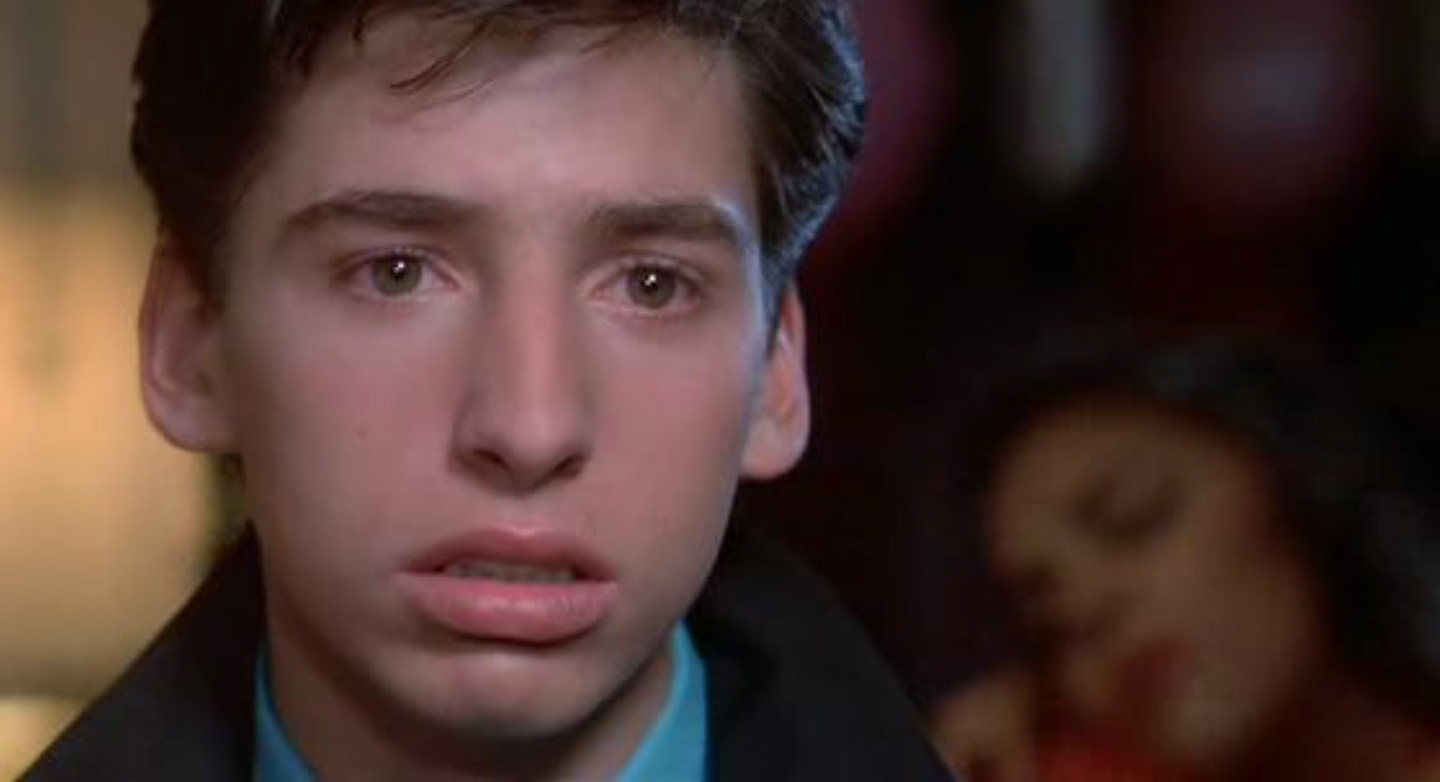
This one is much less about losing virginity than it is about taking it. Specifically, we follow Telly (Leo Fitzpatrick) and Casper (Justin Pierce). Telly has taken it has his mission in life to deflower virgins. This is a dark and unsettling trek through an urban landscape overrun with carefree teenagers. We take unflinching looks at promiscuity, rape, drug and alcohol abuse, violence and sexually transmitted diseases. All of it involves youngsters ranging from possibly pre-pubescent stages to their late teens. Most of the performers are actually as young as they appear. Because of that I can safely say this is the most controversial film on this list. It's also the one you're most likely to hate. By the way, most of the actors are making their film debuts including Chloë Sevigny and Rosario Dawson.

5. Easy A
(2010)
Rather than giving us a protagonist actively trying to lose their virginity, Easy A gives us Olive (Emma Stone), one that pretends to. As news of a tryst she completely makes up gets out, she is suddenly the most notorious girl in school. This is a whip-smart comedy that doesn't just use Nathaniel Hawthorne's classic "The Scarlet Letter" for inspiration, it openly refers to it. Ditto for John Hughes movies. It also deals with the religious aspect and displays just how easily perception becomes reality.

4. American Pie
(1999)
Not satisfied with giving us one guy, pun intended, this teen sex romp gives us four guys in a race to see which one will lose their virginity first. Most of our focus is on Jim (Jason Biggs), who is awkward himself, but has an even more awkward dad (Eugene Levy). The story functions well enough, but what makes it work is that it has given us so many iconic scenes that are hilarious all by themselves. Yes, this includes what happens to an innocent cherry pie. And yes, this is the movie that introduced the acronym MILF to the American lexicon.

3. Porky's
(1982)
Our frustrated virgin is Pee Wee (Dan Monahan). So frustrated is he, he can think of nothing else besides getting into some girl's pants. Believe me, he and his buddies get into all sorts of situations where poor Pee Wee gets close but no cigar. To me, this is the most consistently funny of all the movies listed. Sure it's crass, irreverent and awfully juvenile, but it's downright hilarious. The scene showing why a female gym-teacher is called "Lassie" (played by a young Kim Cattrall) simply puts me in stitches every time I see it. And I would argue that behind the Hitchcock classic Psycho, and only by a very slim margin, this movie has the second best shower scene in cinematic history.


2. The Sessions
(2012)
In what is pretty easily the most unique movie on this list our virgin is not only an adult, but Mark (John Hawkes) was stricken with polio at a very young age and cannot move anything below his neck. We follow him during his time with Cherryl (Helen Hunt), a sex therapist who agrees work with him. The end goal is that the two will have sex. As you might imagine, Mark is filled with anxiety and things don't always go smoothly. This is not merely about getting some, it is about figuring out how the mechanics of it will work. It is wickedly funny and both Hawkes and Hunt are absolutely amazing.

1. Fast Times at Ridgemont High
(1982)
There are lots of things going on in Fast Times. Most prominent of all is the story of Stacy (Jennifer Jason Leigh), a high school sophomore looking to give someone her most precious gift. Like American Pie it has given us a number of scenes that have become indelible parts of American pop culture history. It also gives us a story that works from every angle. It's also more mature than just about any teen sex movie out there. Every part of it just sizzles. Finally, it gives us by far the best cast of any movie on this list and many others. Many of them, including Leigh, Anthony Edwards, Eric Stoltz, and Judge Reinhold, went on to lengthy and successful careers. Three of its players went on to win Oscars for Best Actor: Sean Penn, Forest Whitaker, and Nicolas Cage (billed under his birth name of Nicolas Coppola).

Friday, November 22, 2013

The Last American Virgin

Directed by Boaz Davidson.
1982. Rated R, 92 minutes.
Cast:
Lawrence Monoson
Diane Franklin
Steve Antin
Joe Rubbo
Louisa Moritz
Kimmy Robertson
Tessa Richarde
Brian Peck


Way back when I myself was a virgin, I stumbled upon this movie late one summer night on HBO. In those days, I spent my break from school with my grandparents. The very first time I tried to watch it, I actually didn’t get very far. In true 1980s teen sex romp fashion, there is a good deal of nudity, particularly early on. What I didn’t know was that, upstairs, my grandfather had also come across this movie. Seconds after the first boob pops out, he appeared at the top of the steps and told me to “Turn off that X-rated show!” The Last American Virgin isn’t really X-rated, but in his eyes nudity was equivalent to hardcore porn. I’m only guessing that he continued to watch himself since I never had enough courage to ask.

As for me, all was not lost. At least in back then, if not still, whatever appeared on HBO would likely be aired at least three or four times a week throughout whichever month it happened to be. I studied the TV guide and memorized a number of the upcoming airtimes. Over the course of the next thirty days, I must have watched this movie a dozen times at all hours of the night. I also saw it a few more times over the next couple of summers. To a curious and horny young boy, it was one of the greatest films ever made. That was thirty years ago. Though I hadn’t seen it since, it was still a piece of my adolescence I could never forget. By now, I figured it was time for a rewatch to see if it really is the sacred cow I’d built it up to be in my head.

After all this time, I once again meet Gary (Monoson). Unfortunately for him, he is the title character. He may not actually be the last virgin in the entire country, but he sure feels like it. Like lots of teenage boys, his entire existence is dedicated to changing that status. Things would probably go a lot easier for him if he weren’t so awkward around the opposite sex. To help him break the seal, so to speak, he has his two bestest buds Rick (Antin) and David (Rubbo), plus the very liberal use of his boss’ car when he is not using it to deliver pizza. We join the boys on their adventures in tail-chasing which includes run-ins with a trio of girls looking to get high, a very horny Latin cougar, a prostitute, and a couple regular girls from their school. Of course, one of them is Karen (Franklin), whom our hero has a very big crush on. Rick, with the help of his boys, trying desperately to get into someone’s pants ensues.


Early on, the movie takes on a sketch-comedy quality as the boys bound from one escapade to the next. All of these are merely to drive home the point that Rick is a ladies’ man, David picks up his left-overs, and something outrageous is going to happen to prevent Gary from getting some. To its credit, these situations are generally funy in the most juvenile way. It’s just believable enough that any of these things could happen that really sells the jokes. Granted, they often happen in a manner that’s way too slapstick, but up until that point we have fun with their sexual misadventures.

Between these, our hero agonizes over Karen whom eventually starts dating Rick. This part of the movie works, but doesn’t come off quite as intended because Lawrence Monoson is not a strong enough actor to pull it off. The script helps him out as it gives us easy pointers on where the emotion should be. Overall, the writing is actually fairly courageous for the genre. It brings up the debate on pro-choice vs. pro-life, and is actually ambiguous enough that its stance is open to interpretation. Perhaps even braver, it does not end the way we expect it to. It’s actually a fairly harsh conclusion, especially for a teen sex comedy. For me, this finish elevates the movie above most of its ilk.

Often, when I go back to movies I loved during my youth I’m sadly disappointed to discover them to be not nearly as good as I thought. Watching The Last American Virgin again, I was bracing for this strong possibility. I must say I was pleasantly surprised. It still makes me laugh and it holds up pretty well. After all, the theme of a boy efforting to lose his virginity is timeless. Aside from that, it manages to include many of the type of antics the genre is known for, but also takes it in a less traveled direction.

Wednesday, November 20, 2013

Battlefield America

Directed by Christopher B. Stokes.
2012. Rated PG-13, 105 minutes.
Cast:
Marques Houston
Mekia Cox
Christopher Michael Jones
Jojo Wright
Tristen Carter
Valarie Pettiford
Gary Anthony Sturgis
Russell Ferguson
Big Boy


Sean Lewis (Houston) is a young, hot shot exec who is climbing the ladder of success at breakneck speed. That speed gets him in trouble on the road as he has accumulated a string of traffic violations. He is so busy with his career, he merely tasks his lawyer to handle it without his presence. When informed he must appear in court for his latest discretion or risk being thrown in jail, he does, but takes a very cavalier attitude with him. Luckily for him, instead of getting sent to the slammer, his lawyer brokers a deal for him to perform community service. The catch is that it must be done for eight hours a day over the next two weeks. This is to be performed at a rec center in the hood where he is put in charge of a group of boys who want nothing more than to win the Battlefield America kiddie dance crew competition. Of course, they’re not the most disciplined or talented group. Sean trying to connect with the boys, keep his career intact, and woo Sara (Cox), the gorgeous rec center director, ensues.

Everything that happens in this movie pertaining to our hero’s relationship with the boys occurs exactly as you think it would. He forms a special bond with the tough kid, wins over the heart of the pretty girl, disappoints them when he reverts to his old selfish ways, etc. Surprisingly, this predictability is less of an issue than how we get from one overly familiar plot point to the next. Instead of flowing into one another, developing things as we go, we get a succession of disjointed scenes. As each begins we get the sense that something was left out between the beginning of the one we’re watching and the end of the one we saw before it. This renders character attitude changes jarring and events feel like they’re happening only because they are supposed to, not out of the organic growth of the story. This is worsened when there is a dance set between two dramatic scenes. The movie uses the dance sequences as excuses to jump to whatever the next item on the checklist is without actually navigating the waters to arrive there. This calls attention to other things that are so illogical they seriously stretch the idea that this is taking place in our world. For instance, after our hero is caught red-handed not performing his community service in the time mandated his punishment is not jail, as it would be for you or I. Instead, he’s merely given more community service. Matters are not helped by the fact that not one actor brings enough weight to their roles to really sell it and help us get past such things. The whole thing is not just paint-by-numbers. It is coloring with a highlighter so that all of the numbers are still visible.


Most things aside from what happens between Sean and the crew are laughable, at best. How he handles his work situation is simply ridiculous and the inevitable outcome of it is an eye-roller. The bigger problem, however, is its falling into the same trap as countless other urban dance flicks. We’re dropped into yet another underground dance culture where most dancers are evil thugs and the most thuggish ones dominate all of the competitions. Of course, many of these competitions take place at night in back alleys and change locations often as if an attempt to avoid police detection. It’s already silly in movies featuring people in their late teens and early twenties. Here, where none of the dancers have even reached puberty it’s goofy on hyperdrive.

Here’s the thing: dance movies are largely critic proof. You can slap together any story, no matter how lazy or sloppy, and people who love dance movies will enjoy it as long as the dancing is good. Why do you think they keep making sequels to  Step Up? It’s not because some great saga needs to be continued. It is because the high energy and inventive dance routines keep drawing crowds. No, they’re not raking in comic book movie dough but these are low budget affairs, relatively speaking, and bring in big returns. For instance, Step Up Revolution cost $33 million to get on the big screen and hauled in $140 million at the box office. True, Battlefield America was a commercial failure, but may earn years of returns from cable networks running it ad nauseum, like the Jessica Alba dance movie Honey. In other words, there is an audience for this. I can’t say I blame people for liking it. For all of it’s many faults, being dull is not one of them. To the point of this review, to help you figure out whether or not you should see this, I’ll say that the big selling point on the DVD cover is that this is “from the writer, director and creator of You Got Served." You decide whether that is an invitation or a warning.


MY SCORE: 3/10

Monday, November 18, 2013

Universal Soldier: Day of Reckoning

Directed by John Hyams.
2012. Rated R, 114 minutes.
Cast:
Scott Adkins
Mariah Bonner
Andrei Arlovski
Rus Blackwell
Audrey P. Scott
David Jensen
Roy Jones, Jr.


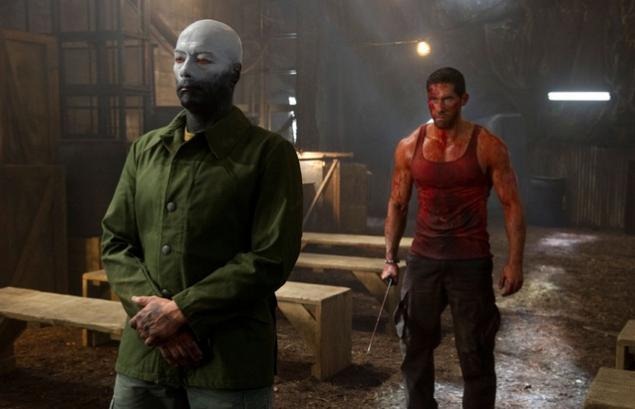
John (Adkins) is woken up in the middle of the night by his daughter who says there are monsters in the kitchen. Like a good father, he goes to investigate. When he gets there, he discovers she was right. Three men in ski masks are waiting for him and proceed to beat half to death with a crowbar. While he lies in a pool of his own blood, the men bring down his daughter and his wife and murders them right in front of him. Fast forward nine months to John waking up in the hospital. He’s told by the FBI that a man named Devereaux (Van Damme) is responsible. Our hero trying to find this man ensues. His quest is made a bit more difficult because Devereaux’s second-in-command, Scott (Lundgren), has sent the maniacal goon known as The Plumber (Arlovski) after John to kill him. If that weren't bad enough, all these bad guys are hopped up the Universal Soldier Serum which makes the stuff Captain America got seem like a B-12 shot.

Immediately, it becomes clear that our focus is on brutal and bloody violence. At this, it succeeds. The next knock-down-drag-out is never too far away. Everything in the vicinity gets smashed, blood splatters everywhere, and body parts are left among the debris. Don’t worry, they get regenerated. No, I’m not joking. Anyhoo, without overextending itself, it is enough to satisfy your average action junkie.


Between all the noisy parts, we get a story that’s simple at it’s core, a bit convoluted in execution, and holds together barely enough to get us through. A few things don’t quite make sense, but not enough to ruin the movie. However, if you’re looking for all of this feature Jean-Claude Van Damme and Dolph Lundgren, you will be sorely disappointed. Neither guy has very much screen time. It is all about this young guy, Scott Adkins. He provides a solid enough protagonist. After all, it’s not like Van Damme and Lundgren were ever accused of being great actors. Okay, maybe once. Van Damme was excellent in JCVD, but that’s it so the point remains. Besides, they do get in on the action a little bit.

In case the title and the presence of two 80s action gods didn’t clue you in, this is another entry in the Universal Soldier canon. I have no idea how many this makes, nor do I really care. The very first one is the only one I have seen. I must confess that happened so long ago I don’t remember much about it. What I’m getting at is this: familiarity with the franchise is not a must to enjoy Day of Reckoning. It works well enough as a stand-alone. For those of you that are familiar, I have no idea how well this fits or doesn’t with the series motif. In any event, it’s perfectly acceptable as a mile-a-minute, turn your brain off action flick.


MY SCORE: 6/10

Sunday, November 17, 2013

Hope Springs

Directed by David Frankel.
2012. Rated PG-13, 100 minutes.
Cast:
Ben Rappaport
Marin Ireland
Brett Rice
Mimi Rogers
Ann Harada


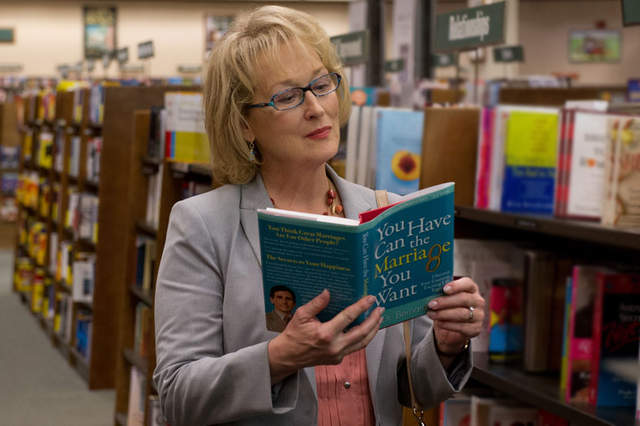
Kay (Streep) has been married to Arnold (Jones) for thirty-one years. For at least the last four, every day has been exactly the same. They eat a quick breakfast before going off to their separate jobs, and a quick dinner when they return home. He then proceeds to fall asleep watching The Golf Channel while she cleans the dishes. When she’s done, she wakes him and he retires to the guest room. She sleeps in the master bedroom. Needless to say, the sparks are no longer flying. In an effort to change this, Kay makes reservations for the two to spend a week in Maine where they will see Dr. Feld (Carell), a famous marriage counselor. Even though he doesn't see anything wrong with their relationship, Arnold reluctantly goes along. By the way, he is also a grumpy penny-pincher whose favorite activity is complaining. A very tough week for the couple ensues.

The best thing that can be said about Hope Springs is that Meryl Streep and Tommy Lee Jones really feel like two people who have been together for three plus decades. They each inhabit their characters fully and let us understand who these people are. We get to know them as thoroughly as they should know each other, but don’t. It helps that we have all known couple like this. They have been together so long, they don’t know anything else. Some of us are that couple. In them, we recognize our own hopes and fears of what marriage will be like once the nest empties.

Right away, Kay is established as the more sympathetic figure. It is easy to see that her frustrations are not only born of her husband’s cluelessness, but of his comfortableness with the way things are. For him, sleeping in separate beds and barely talking to his wife beyond greetings and salutations are merely facts of life. That’s simply the way it is. Of course she desires a deeper connection, both physically and emotionally. She just needs help communicating this. We feel her pain.


To the movie’s credit, it doesn't just attack the problem from one angle. Eventually, we get into why things have gotten this way from Arnold’s point of view. It’s fitting that it takes a good portion of the movie to get to this because he is not a guy given to expressing any feelings that make him appear vulnerable. He’s the proverbial turnip we’re trying to draw blood from. This works wonderfully as we begin to sympathize with him more and more as the film progresses.

Though billed as a rom-com, Hope Springs is much more “dramedy” than anything else. There is lots of angst, some hurt feelings and tears shed. The focus is really on this authentic feeling marriage and whether it can be fixed, not on a succession of jokes. We do get some laughs. Most of them come from Arnold’s incessant grumbling. He is our dad, or grand-dad, and nothing is ever quite good enough or cheap enough for him. Kay is our mother, or grandmother. She’s sweet as pie and struggles to keep it together when she’s upset. We love her to death, but she rarely makes us laugh. The only other character of consequence is Dr. Feld. Steve Carell plays the role surprisingly straight.

This is a movie that hits a lot of right notes and has two marvelous performances. In the end, it comes across as more lightweight than it actually is. Therefore, almost no one will rank this among the best from either actor. That’s a shame because while I don’t think this is a truly great movie, I think they are both great in it. I also fear there is probably a clear line of demarcation separating those who will enjoy it and those who will not. I’d set that line at about age thirty-five and having been in at least one long-term monogamous relationship. In other words, use another Meryl Streep vehicle, It’s Complicated, as a guide. If that’s not your cup of tea, don’t sip from this one, either.


MY SCORE: 7/10

Friday, November 15, 2013

The Paperboy

Directed by Lee Daniels.
2012. Rated R, 107 minutes.
Cast:
Ned Bellamy
Nealla Gordon


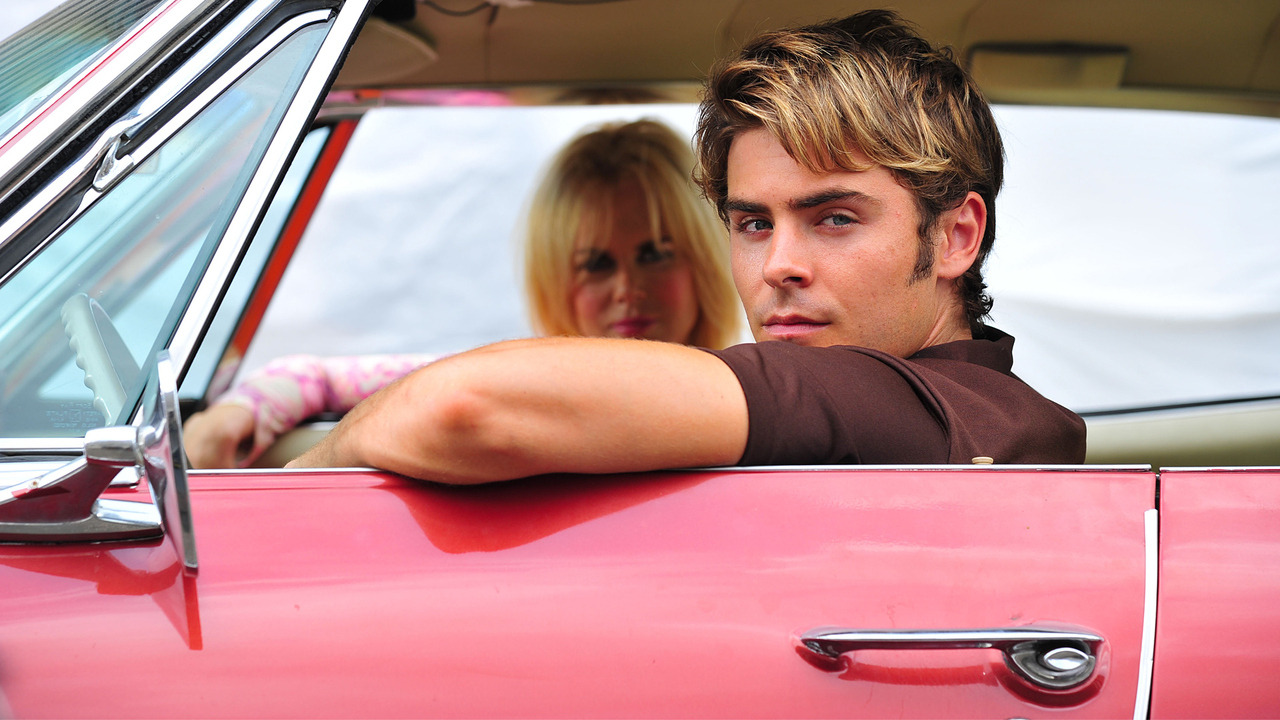
Hillary Van Wetter (Cusack) is sitting on death row after being convicted of murdering the local sheriff. Charlotte Bless (Kidman) is a groupie for inmates who has fallen in love with Mr. Van Wetter through the letters they exchange. She has also sent some letters to big city newspaper reporter Ward Jansen (McConaughey) who happens to be from this particular small town, claiming Hillary was framed. Ward comes home, writing partner Yardley (Oyelowo) in tow, to investigate this possibly huge story and potentially save a man’s life. Also helping out is Ward’s little brother Jack (Efron) who still lives with their parents. Almost forgot, it is the nineteen sixties and we are in the south, so it is of some importance that Yardley, as well as Jansen family maid Anita (Gray), is black. Also vital to the tale is that our prisoner is certainly no angel.

What The Paperboy wants to be is a hyper-sexual, racially charged, and shocking thriller. To that end, it does things that are hyper-sexual, racially charged, and shocking. The problem is they don’t come together in a manner allowing it to be what it wants. The ones that work are undeniably memorable. I, for one, will never forget the scene of Charlotte’s first visit to Hillary in jail. The ones that don’t work merely add to the clutter.

Believe it or not, seeming to fly by the seat of its pants is not this movie’s worse offense. All of the different strands, even though they don’t congeal properly, are intriguing in their own way and could have made a really fascinating movie. The bigger issue is the mechanics it uses to tell these stories. An old adage that applies to art in any medium is that it is better to show than to tell. Lesser artists often tell, robbing their work of its power. Think of it like the punchline of a great joke. People who “get it” will probably laugh. Those you have to explain it to, will probably not. Through the use of Anita as a narrator, The Paperboy constantly explains itself. Nearly every time we hear her in voice-over, she’s either telling us what we just saw, or what we are about to see. This is a common pitfall for movies to fall into when employing a narrator. It’s one The Paperboy never even tries to avoid.


On top of being the annoying narrator, Macy Gray gives a terrible performance whenever she appears within the story. She often sounds as if she is reading. Even then, her words are garbled in a way that doesn't fit the character. She has a cameo in Tyler Perry’s most ambitious film, For Colored Girls. I am not a fan of Perry’s, but Gray combines with his direction to give us a wonderfully harrowing two minutes of film. She also has a solid, but brief turn in Training Day. Her performances in those movies versus what we get here lead me to believe she’s best in small doses. Very small.

Zac Efron as Jack, the actual focal point of all the goings on, also fails to impress. He doesn't do anything egregiously wrong. He just is not believable. He never feels as naïve and innocent as he should. I know that’s an odd thing to say about a guy best known for the High School Musical trilogy. The truth is, he’s become a sex symbol and wears the status like a second skin, giving off a confidence this character is not supposed to have.

If there is a saving grace for this movie, it’s the rest of the cast. Matthew McConaughey is his typically magnetic self. The man has undeniable presence and it is once again on full display. As the man on death row, John Cusack matches McConaughey, if not surpassing him. He completely takes over whenever he is on the screen. I fear that because this will not be noted as one of his better movies, it will be some of his most overlooked work. David Oyelowo is also very good. We’re never really sure how to take his character, but he’s awfully convincing doing all the things he does.


Outdoing all of the guys, we get our biggest kick out of, or are most disgusted by, a vamped up Nicole Kidman. She keeps the gas pedal to the floor all the way through the film. Her character is not likable and doesn't seem to be all there. She often only vaguely resembles a human being. It is just a ridiculously bad role. She couldn't possibly make it believable. Still, she plays it to the hilt, bringing an element of “so bad it’s awesome” to the proceedings. Watching her, Basic Instinct 2 came leaping to mind. About that movie, the late great Roger Ebert wrote “The Catherine Trammell role cannot be played well, but Sharon Stone can play it badly better than any other actress alive.” The same applies to Kidman, here.

As for the rest of the movie, things keep happening that appear independent of each other but the movie keeps trying to persuade us are part of a cohesive whole. Many of these seem to have been done simply for shock value. Our conclusion is fun, but doesn't make a whole lot of sense. Let me backtrack for a sec. What happens makes perfect sense. How it happens does not. We’re left with a film that has an awful lot going on and can be fun because of all the zaniness. However, it never feels like it actually works.