Friday, May 16, 2014

Percy Jackson: Sea of Monsters

Directed by Thor Freudenthal.
2013. Rated PG, 106 minutes.
Cast:
Douglas Smith
Leven Rambin
Jake Abel
Paloma Kwiatkowski

Things seem to be all hunky dory at Camp Half-Blood when there are a couple of odd occurrences. Our hero, Percy Jackson (Lermer) finds out he has a half-brother who is a cyclops. Next, the mystical barrier that keeps intruders out of the camp is broken, leading to an epic battle with an angry magical (and mechanical) bull that ends with the return of a certain bad guy. Lastly, the bumbling idiots who run the place inform Percy of the prophecy that says he will either save Mount Olympus or destroy it in the attempt. The Golden Fleece seems to be the cure for all their ails. This means going on a quest to find and retrieve it, and of course, saving or destroying...yeah, that.

Once again, Percy has his trusty cohorts Grover (Jackson) and Annabeth (Daddario) in tow. The three share an easy chemistry that serves the movie well. To that mix, Tyson (Smith) the half-brother is added. The four of them provide a pleasant enough quartet. there's a little more than a hint of sexual tension between Percy and Annabeth which drives their scenes together. She also has a raging hatred of Tyson that plays into the moral of the story. There is also Grover in full Magical Negro/comic relief mode, ever ready with some silliness to keep things from getting too heavy. None of this is exceptionally good or bad. It just sort of is and helps us roll along innocuously.

The rest of the cast is a slightly better. Not surprisingly, Stanley Tucci fares best in his role as the weary Dionysus (Mr. D), an instructor at the camp. All the man wants is a drink of wine. However, his verbal taunting of the gods has cost him this small pleasure. It's not uproariously funny, but his scenes are consistently humorous. another bright spot is Derek Mears as a big, evil cyclops. He's not going into the villain hall of fame or anything, but he provides a decent counterpoint to our heroes.


Similarly to the blandness of most of the characters, the plot unfolds in not-so-thrilling fashion. It just hits all the spots it's supposed to when it's supposed to. Nothing unexpected takes place. This makes tension the biggest casualty of all the story-telling devices. We just never feel like the good guys are in any real danger. True, going into a kid-friendly adventure like this we know the good guys are going to win. However, this movie fails to ever approach making us doubt the fact. Instead of hanging on to the edge of our seats, we're more likely to be comfortably slouched against the back of them and checking our watches.

Lots of movies of this caliber, narratively, manage to save themselves with plenty of action. This one tries, it just fails miserably. The main culprit is shoddy cgi. When the mayem breaks loose, things start looking cartoonish, but not like this was done on purpose. It further adds to the sense that we have nothing to worry about in regards to the hero's well being. We're snatched from being involved in the movie, to being reminded we're watching one. No matter how many I've seen, good films draw me into the world on the screen, regardless of how far-fetched it might be. I become invested in the events playing out before me. This is more like a stranger stooping in front of your window to tie his shoe. It might be sort of interesting, but not a compelling event. Whatever fascination it may hold passes when they stand up and continue on their way. Shortly, you may forget it ever happened. Percy Jackson stoops in front of your window to tie his shoe.


Sunday, May 11, 2014

Happy Mother's Day 2014


Happy Mother's Day to all the moms that happen to drop by today!!!

Over the years since I've been blogging, I've given my two cents on a number of movies that deal with motherhood (and grandmotherhood!). There have been some good moms and some bad ones. There have even been good moms in bad movies and bad moms in good movies. Below are the most recent movies I've reviewed that deal with the subject, in reverse chronology of when I posted the full reviews. You can read those reviews by clicking on the corresponding titles. Sorry, rambling...here we go...


Mama is an old-fashioned ghost story. It employs some new-fangled technology, to be sure, but the frights it tries to provide are from an era long since passed.


We get a fun and occasionally harrowing tale of a mother and daughter bonding through girl power.


Jackie is a stay-at-mansion mom who goes to expensive charity luncheons. Calling her a mom might be giving her too much credit as a team of nannies and housekeepers do most of the work.


We meet a handful of women who will very shortly be expecting, then journey through pregnancy with the soon-to-be mamas.


The last sixteen years have been a living hell for Eva. Things don’t appear to be getting better. She spends most of her days agonizing over what has happened during that time which culminates with her teenage son Kevin in jail.


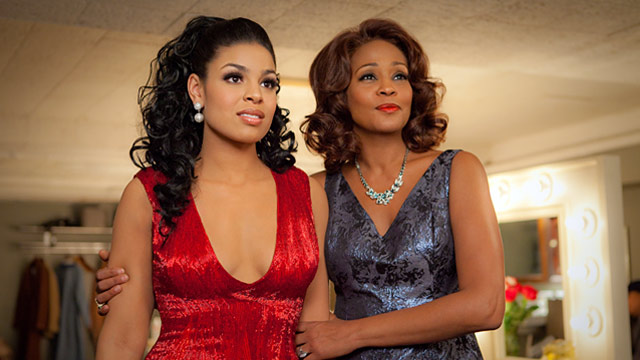
To make sure we know who’s in charge, Whitney Houston is in full blown, stark raving mad lunatic warden mode. You get the feeling the girls have to ask permission to use the restroom or risk her wrath.


From the moment Rebecca De Mornay appears on the screen we’re pretty much mesmerized. As our main protagonist, she gives a brilliantly odd performance that makes us believe we’re finding out what it would be like if June Cleaver were a homicidal sociopath.


Director Roman Planski's horror classic in which Rosemary believes there is a cult out to harm her and her unborn baby.


Aparently, Martians know nothing about raising their young. From time to time they come to Earth to get the knowledge they need. No, no, no they don’t enroll in a parenting class or anything like that. They abduct a human mom.


To others she seems quirky, not all there and not quite sure of the gravity of both her situations. We know better.


Friday, May 9, 2014

12 Years a Slave

Directed by Steve McQueen.
2013. Rated R, 134 minutes.
Cast:
Lupita Nyong'o

It's 1841 in Saratoga Springs, New York and Solomon Northrup leads a somewhat idyllic life. He is a free black man living with his wife and children and interacting with whites as a near equal. He is also known around town as a excellent violinist. When a couple of out-of-towners offer him a job playing in their traveling show, he takes them up on it. Assured they'll go no further south than, Washington DC things seem to be going well when he goes to a celebratory dinner with his new benefactors. However his world is turned completely upside down when he wakes up in chains, is taking below the Mason-Dixon line and sold into slavery. Based on the real Solomon Northup's autobiography of the same name.

There is one word that I've seen used repeatedly to describe this movie. That word is visceral. The reason I keep seeing it is because it is an entirely accurate description. Every epithet hurled and whip cracked is both physically and emotionally jarring. Each indignation is repulsive. The shame of it all is that this is as much American history as any story that could possibly be told. It depicts the roots of problems we're still dealing with all these years later and it does so unflinchingly.

To make it all work, we need totally committed performances. There can be no a moment where any actor appears even the least bit unsure of his/her character's situation in this world. Throughout the movie there are none. As Solomon, Chiwetel Ejiofor is a man who cannot hide his sophistication in spite of his circumstances, and is powerless to change them. His frustration bleeds into every frame, none more than when he is forced to administer the punishment of a fellow slave. However, he still tries to see the good in people and appeal to that side of them. As you might imagine, the results aren't always pleasant.


As good as Ejiofor is, the performance that makes the movie is Michael Fassbender's as Master Epps. For quite a bit of the film's run time, everything that happens is either his own action or a reaction to him. He is a man who fully believes what he is doing is divinely right. Without even a hint of doubt, Fassbender brings this across with such assuredness that is downright frightening. Playing a less empowered, slightly less scary version is Paul Dano. That he is less scary is not a function of his acting which is excellent, but of his role as someone a bit further down the food chain.

Of course, we can't conclude any discussion of the acting in this movie without giving serious consideration to the work done by Lupita Nyong'o. She became a media darling even before winning the Best Supporting Actress for her work here. She plays Patsey who is something of a star slave on Epps' plantation. She picks more than twice as much cotton as any man on a daily basis. As such she is his favorite. Her reward? He oddly dotes on her and rapes her from time to time. In his own very twisted way, he cares for her. This makes the cruelty she endures feel even worse than it does when suffered by others. Nyoug'o masterfully brings this to life. It is actually Patsey, not Solomon, who gets the lion's share of our sympathy. What happened to Solomon is undeniably cruel and unjust. What happens to Patsey is even beyond that. Much of it is done upon the encouragement of Mary, Epps' wife, in an under-appreciated performance by Sarah Paulson. She has a coldness that permeates the screen whenever she appears. what makes her such an important figure is that she is the one person who bends Epps to do her bidding. She holds a demented moral authority over him. Paulson completely owns this every time she comes into the picture.

Enabling these actors to disappear into the roles, and more than believably reconstructing the world as it was in the mid-nineteenth century, is director Steve McQueen. I've already mentioned how he doesn't let his camera flinch. More impressively, he places it in very intimate positions. The viewer is not just seeing the atrocities take place but feeling them. Making us feel them, no matter how uncomfortable we might get is clearly the goal. This is why he frames the story in a manner that forces us to deal with Patsey's plight, as well as Solomon's. Even as the movie ends, McQueen's still hasn't let us off the hook. It's an effective move. A friend of mine, both of us African American, watched 12 Years a Slave weeks before I did. He immediately texted me that he didn't like it much. Its not that he thought it was bad. It just put him in a bad place. He was infuriated by the visual reminder of the unbridled cruelty of slavery. My response? Dude, that's kind of the point.

Wednesday, May 7, 2014

Elysium

Directed by Neill Blomkamp.
2013. Rated R, 109 minutes.
Cast:
Jodie Foster
Wagner Moura
Emma Tremblay
Faran Tahir
Jose Pablo Cantillo
Adrian Holmes

Matt Damon plays President Obama. Okay, not really. It's probably too soon for you to get where I'm going with that so I'll come back to it later. Damon actually plays Max Da Costa who lives in Los Angeles in the year 2451. He's a convicted felon trying to live life on the up and up. That's a little difficult when the police, automated by the way, just yank you out of line at the nearest checkpoint and arrest you whenever they want due to their knowledge of your past. I imagine its also difficult when you know unequivocally that you will never rise past a certain station in life. Such is the way of society in the twenty-fifth century. All those beautiful and wealthy people that make up the one percent have finally just packed their shit and left us here. Literally. They live on a space station high above Earth named Elysium. They've got it so good, they even have a machine that cures any disease in a matter of seconds. The rest of us slugs are stuck here on the third rock basically going all crabs in a bucket on each other. For us regular folk, getting sick is pretty much a death sentence. As luck would have it, that's precisely what Max does. Well, not exactly. He actually gets exposed to as much radiation as humanly possible without dying on the spot or transforming into The Incredible Hulk. He's told he will most certainly expire in five days, is given some pills to make the time bearable and sent on his way. Understandably, he tries to get to Elysium, ASAP! One little problem with this: the good folks in the sky shoot down anything approaching their home and immediately arrest anyone aboard anything that manages to slip through.

I like to start with positives, so let's talk action. This is clearly the best part of the movie. It's fast, brutal, and certainly more graphic than I expected going in. Another plus is the premise. Theoretically, if we were to start living anywhere other than Earth's surface, the super rich and/or important would probably be our first colonists. What would it be like if they all just took off one day? There are also shades of the sci-fi classic Metropolis present. The rich and the poor really do live in societies segregated by bank account sizes. Just like in Fritz Lang's masterpiece, and in real life (oops, didn't mean to say that out loud), the elite are largely supported by the labor of the poor while simultaneously thumbing their noses at them. In fact, John Carlyle (Fichtner), who has to be on Earth to oversee operations for his company, incidentally where Max works, tells us directly that he hates "breathing this air."


Unfortunately, things never quite come together like they should. One problem is that once it's established that our hero needs medical help, the exploration of the differences between the classes ceases. Instead, we quickly shift into Star Wars mode as Luke (a sleep-walking Matt Damon) and the Rebel Alliance try to infiltrate the Death Star. We're not as behind them as we should be because we discover that the people of this particular empire aren't really all that evil. They might be oblivious, an indictment on its own, but not enough for us to go all in on their mission. This leaves our Darth Vader, or Delacourt, played by Jodie Foster, seeming to act alone, except for her Earth-bound Boba Fett, or Kruger (Copley). As Vader imitations go, Foster does a piss poor one. She plays it completely stone-face, which isn't too terrible. However, she takes it way over the top by speaking with the most ridiculous accent from nowhere since Tom Hanks in The Terminal. It's especially grating because no one else is doing it. By the way, she's also got a little Col. Jessup from A Few Good Men going on. I say this because one of her big moments is giving her version of "You need me on that wall!" She even seemed to be struggling to refrain from blurting out "You can't handle the truth!"

So far I've mentioned Metropolis, Star Wars, The Terminal, and A Few Good Men. This points to another big problem with Elysium. It's too transparently derivative. I get that there's nothing new under the sun, but this doesn't even try to disguise the fact that it's just a hodgepodge of other, better films. Even the look of it, during the scenes on Earth, is very similar to another movie. That movie is director Neill Blomkamp's own hit District 9. It gets to the point where you just start picking out which movie each particular element comes from. This works for the best when, say, Quentin Tarantino does it as a way of paying homage and putting his own spin on it. Here, it feels like a lazy knock-off someone is trying to pass off as the real deal.

If there is one part of the narrative into which great effort was put, it's the movie's message. Sure, our hero is sick, but great pains are taken to make it clear that his ex-girlfriend's daughter Matilda (Tremblay) is even sicker. She's stricken with leukemia. Even though her mom, played excellently by Alice Braga, works in a hospital, they can't afford treatment and even gets kicked out of said hospital. The only thing we need to know about her is just what I've told you. She's a child who is probably going to drop dead before Max. This is why our sickly Luke Skywalker is really Pres. Obama. He's gonna get this poor girl cared for, dammit! Whether or not you agree with it on principal, I think we can all agree the Commander-in-Chief used some forceful tactics to get his baby passed into law. Again, regardless of how I feel about it, because I actually think it's a good idea, just poorly executed, we don't need a two hour commercial for ObamaCare, even if it does use excerpts from some of our favorite movies.


MY SCORE: 5/10

Saturday, May 3, 2014

Elena

Directed by Andrey Zvyagintsev.
2011. Not Rated, 109 minutes.
Cast:
Nadezhda Markina
Andrey Smirnov
Elena Lyadova
Aleksey Rozin
Evgeniya Konushkina
Igor Ogurtsov
Igor Yurtaev

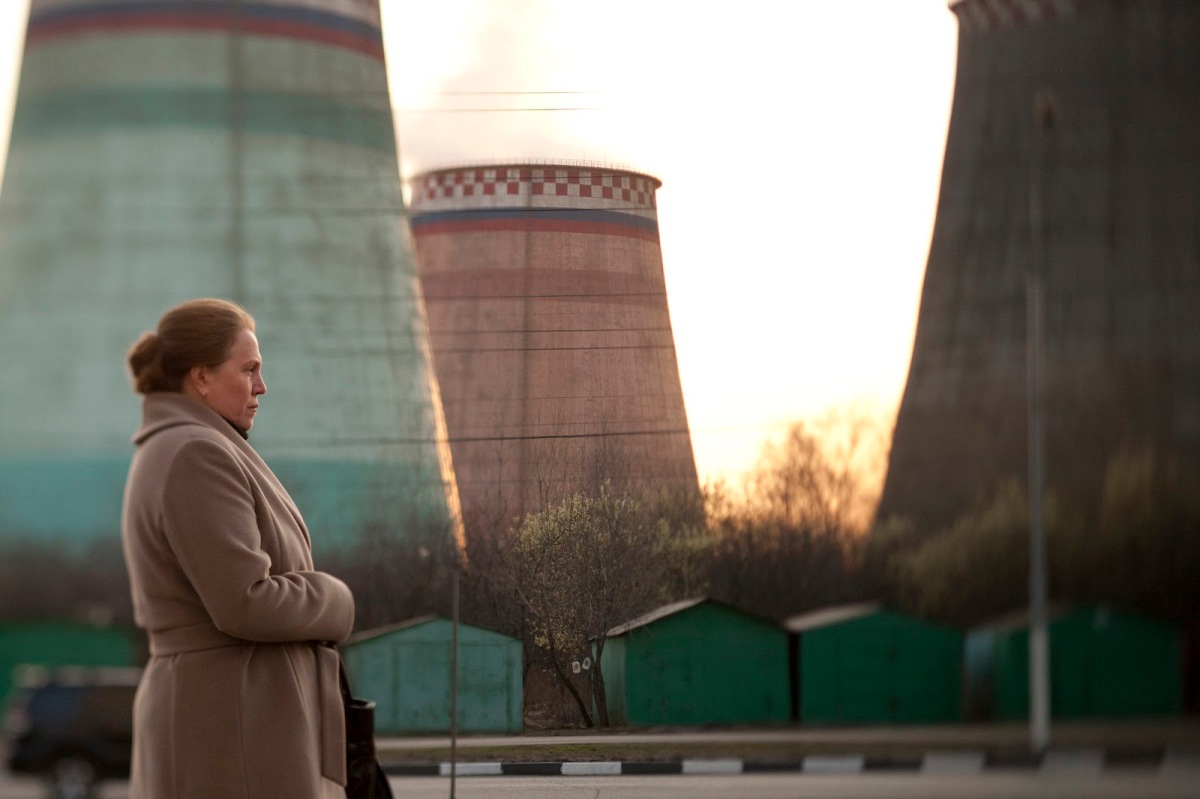
Elena (Markina) is a retired nurse in her sixties. She has been married to the wealthy Vladymir (Smirnov) for 2 years. Their life together is fairly mundane, driven by routine. They get along fine and stay out of each other's way. In fact, they even sleep in separate beds. This movie isn't about that. After all, we find out they do still have the occasional roll in the hay. This is about the one real point of contention in their relationship: Elena's son Sergey (Rozin). Sergey is married with a couple kids. He also hasn't worked in who knows how long and is constantly asking his mom for money. In turn, Elena usually has to ask Vladymir. After grumbling and objecting, Vlad usually forks over the cash. Sergey is aware of all this and his latest request is a doozy. It concerns his oldest child who has botched his schooling so bad it seems the military will be his only option. Not wanting that, Sergey asks mom for enough money to basically by his son's way into college. When Vlad gets word of this, he puts his foot down. However, after his wife begs and pleads, he says he'll think about it some more and give her an answer in a week. The next couple weeks ensue.

The director goes out of his way to create the feeling that we're really traveling through Elena's life with her. He does something in a way most movies haven't the courage to try. For instance, right at the beginning we witness her wake to her alarm, contemplate moving for a moment or two, stretch, go put some tea on, enter her husband's bedroom, yank the curtains apart, wake him, etc. When she leaves to go visit Sergey and his family we watch her walk down streets, stop at the store, and so on. It sounds tedious, and for some viewers it will be, but the way the director edits it her day feels like a journey to a coveted destination. The wonderfully subtle performance by Nadezhda Markina bolsters that feeling. She doesn't sprint from place to place, but she certainly moves with purpose. She has given herself a schedule. Anything that throws it off bothers her. It is no surprise that she is clearly upset when the store clerk has to call for assistance. This establishes who she is - an orderly person who is devoted to those she loves.


Great pains are also taken to establish Vladymir and his relationship with Elena. Though he's wealthy, undoubtedly having worked all his life, and stubborn, he is now someone who must be cared for. We rarely see him actually moving. It's a bit of a struggle when he does. He trudges from his bed to the bathroom. The one time we see him extend himself he has a heart attack. Both before and after this, he seems to spend most of the day in bed with Elena bringing him meals and cutting off the television when he falls asleep. To carry his feebleness a step further, the director does something really interesting that could easily have wound up on the cutting room floor. A few days after Vlad's heart attack we see Elena wheeling him out of the hospital room for the final time. Instead of immediately cutting to whatever is next in their lives, we stay in that room. The nurse comes in and assumes Elena's role for the rest of this scene by preparing it for the next patient. The key is that we understand Elena has little more personal connection to Vladymir than the nurse. She's just cleaning up after him. There exists a distance between them. Remember, they sleep in separate beds. Neither works, but they go their separate ways every day. This distance is likely a major factor in the decision that turns the movie. On the flip side is Vlad's daughter Katya (Lyadova). She's a free spirit. More importantly, she doesn't take care of her father and their relationship is strained seemingly because of this fact. Her name is invoked in conversation often by Elena, who doesn't like her. Why should she? Elena is taking care of the man his own daughter refuses to. Vladymir gets angry when any of this is brought up, but calls for his daughter when he is at his weakest.

This is all a fascinating set up for an intriguing finale. Our feelings about Elena change. The first question is can we understand and/or sympathize with her position? Other questions follow. Do the ends justify the means? Thanks to an at-first cryptic final shot, we have to ask ourselves are the ends truly the end? It could simply be the perpetuation of a cycle. We can also ask ourselves would we do what Elena does? However, the more appropriate question is could we? Making all of this swirl around in our head is the genius of this movie. It goes about its business in a rather ho-hum manner. This makes it a slow burn rather than a heart pumping burst of energy. Those of us without much patience might dismiss this film too soon. After all the morning routine dominates the first act and things like it routinely occur. None of it immediately stands out as remarkable. The things that break that routine stand in stark relief, drawing attention to both. However, they don't happen at all rapidly, making it easy to tune out early. That would be a mistake. Elena is a movie that requires you to put on your thinking cap, but is not complicated. Just stick with it.

Thursday, May 1, 2014

The Heat

Directed by Paul Feig.
2013. Rated R, 117 minutes.
Cast:
Demian Bichir
Jane Curtain
Marlon Wayans
Michael McDonald
Spoken Reasons
Jessica Chaffin

The FBI's Agent Ashburn (Bullock) is super smart, solving cases with a Sherlock Holmes like intelligence. Her work has her up for a big promotion. Unfortunately, a lack of any discernible personality is her holding her back. No one seems to like her in the least way. Her boss is worried this wouldn't translate well to a position of leadership. For a chance to prove herself, she's put to work trying to bring down a major drug trafficking ring. Against her wishes she's forced to work with local cop Detective Mullins (McCarthy) who is driven and passionate about crime fighting, but highly abrasive in case you haven't seen the trailer. What we have here is a typical wunza buddy comedy. You know, wunza straight-laced by the book colorless FBI agent and wunza manic, fly by the seat of her pants f bomb, dropping slob of a cop.

With the formula pretty much set in stone, The Heat dutifully goes down the checklist of buddy flick tropes. The bland Ashburn is the butt of most jokes and the one Mullins is constantly trying to change in order to get her to loosen up and enjoy life. Through all the initial hatred of one another and completely opposite approaches to the same task, there is, of course, a friendship being formed. McCarthy is there to give us the comedy by verbally abusing every person in her vicinity. Occasionally this does manage to hit the funny bone, particularly early on. After a while we know what's coming so it loses its sting and just becomes noise to suffer through. She's clearly a character cut from the cloths of Eddie Murphy's Axel Foley and Mel Gibson's Detective Riggs. Unfortunately she takes only their most basic traits without the charm of either. They are then fused with McCarthy's brand of potty mouth savagery to form a character we may laugh at occasionally, but don't particularly like. Its a shtick better in short doses as in, This is 40, rather than a steady stream of it. One thing that sort of gets us on her side is her family. They are the one deviation from the formula we have. They have completely made her an outcast and she has to suffer through tongue lashings from them. It's a trick to earn some sympathy for her and it works. However, the best thing to come out of these scenes is her brothers' girlfriends injecting themselves into family business. They give as good as they get.


If Mullins is a dumbed down combination of Foley and Riggs then Ashburn is that of Taggart and Murtaugh from the same movies. She exists merely to be appalled by and eventually bond with Mullins. Her comedic task is to attempt things the way her partner wants her to. Again, this is an occasionally amusing tactic that more often just reminds me of fun stuff we've seen in other, better films. Bullock does with the role requires of her. It just doesn't seem to take much effort. There seems to be no challenge in standing off to one side while McCarthy rants and raves. Her character is just an uninteresting woman. In fact, she's so boring I've written these last two sentences just to lengthen a paragraph in which their really is nothing else to say about her. Well, maybe there is one slightly interesting thing about her. She has a cute potential relationship with Agent Levy played by the refreshingly subdued Marlon Wayans. Still, even this is not an earth shattering romance.

Whether or not you like The Heat boils down to one question: do you find it funny when Melissa McCarthy makes lots of noise and cusses like a sailor. If the answer is yes, you're probably thinking I'm some sort of prude, or a movie snob and dismissing this entire review. Fine by me. You may as well stop reading now and go watch it. Put another way, did you like Identity Thief. If the answer is no, you have likely been nodding in agreement as you read. That's more than fine by me. In this case you should probably skip it. It's only going to annoy you, anyway. Proceed accordingly


MY SCORE: 4.5/10

Sunday, April 27, 2014

Poetry in the Movies Blogathon!: Slam


Earlier this month I decided it was time to host my  first blogathon and decided on Poetry in the Movies to honor National Poetry Month. For my second entry we'll take a look at real life poet/alt. rapper Saul Williams making his big screen debut in Slam.

My first post was on the documentary Louder than a Bomb. Tomorrow I'll put up a post with links to those who participated. For now, let's get back to my homie Saul.

Directed by Marc Levin.
1998. Rated R, 103 minutes
Cast:
Saul Williams
Sonja Sohn
Bonz Malone
Lawrence Wilson
Beau Sia
Andre Taylor
Momulu Stewart
DJ Renegade
Allen E. Lucas
Ron Jones
Marion Barry

Ray Joshua (Williams) is a small time weed salesman in Washington DC whose real talent and passion lies in his pen. He writes constantly and hopes to parlay his ability into a rap career with the help of his friend Big Mike (Wilson), a more solvent dealer. When Mike is shot down right in front of our hero, it so happens the cops happen to be in the vicinity. Ray flees the scene, not because he has anything to do with it, he doesn't, but because he's holding a big bag of herb. He gets caught and off to jail he goes. Once there, he finds out lots of people want a piece of him because word is he did have something to do with what happened to Mike. Fellow inmate Hopha (Malone) knows the truth and offers Ray protection. Growing weary of the street life, he balks at that also. Then there is Lauren Bell (Sohn), the cute lady who comes into the prison and teaches a creative writing class. She takes a shine to him rather quickly. Ray contemplating whether to be or not to be ensues.

From the beginning, it's pretty clear we're traveling down the road to redemption. While Ray is in jail, the question is will he get there before someone shanks him. When he gets out, he comes to a fork in that road and isn't sure of which path actually does lead to that redemption. This all leads to some interesting exchanges between he and some other characters. Most notably, his conversations with ... and Hoffa carry he portions of the movie that contains them. The acting of these scenes, and the movie as a whole, is surprisingly good. Though there is one lol-worthy oddity. Then real life mayor of DC, Marion Barry appears as a judge lamenting the effects of drugs on the black community. Maybe it's just me, but I found that particularly hilarious. Most of the actors are in their first and only big screen roles, but come across as authentic in their roles, Mayor Barry excluded of course. In the lead, Saul Williams has a certain charm and charisma which not only serves him well here but also helped him become one of the poetry slam world's most famous citizens. Fellow poet Sonja Sohn may also have a name recognizable to some of you. She would go on to play Detective Kima Greggs on HBO's The Wire.


Since we're on the subject of poets and this is part of the Poetry in the Movies Blogathon, let's talk about their work that shows up here. Well, first let me offer a disclaimer. Even though both of my entries in the blogathon involve slam poetry I am really not that big a fan of this particular sub genre. I find lots of it fun to listen to when performed but rather flat and a chore to get through when trying to read it for myself. That's because many of the writers rely on effective stage methods that don't necessarily translate well to the page. There is a heavy reliance on rhythm, repetition, call and response, easy to follow metaphors, vocal sound effects, some didactism, and lots of rhyming. Despite the rather prevalent idea that poetry should rhyme it can easily become tedious reading poems that do unless they are very well executed.  There are exceptions, of course. I honestly don't think Williams is one of them. He's actually exciting to watch when he launches into either the straight raps of the earlier parts of the film or when he takes the stage for a more traditional slam poem. It is hard to deny his presence. His style lends itself to a visual audience and thus works well within the frame of the movie. It's easy to follow which helps it blend seamlessly into the narrative whereas more densely layered verse may distract from things. Sohn eventually performs a poem of her own that was obviously written purposely for this film. It works to give us one of the film's most poignant moments.

In part because of the poetry, but more because of the story playing out before us, Slam works as a film. We become invested in Ray's plight. More than just understanding it, we feel that he has great potential and hope that he won't squander it. We also see him turning a corner in his life. While applauding this, we're also a bit afraid he won't get all the way around that corner. As the movie ends, we're still not sure which path he will take. This is no feel-good story, but rather a character study that asks you to draw your own conclusion and is wrapped in some still relevant social commentary. It is the winner of the Grand Jury Prize for a Dramatic Film at the 1998 Sundance Film Festival. This isn't to say that that validates it as a great movie, but I think it is a very solid one.


MY SCORE: 7.5/10