

Dell slaves over a hot Blu-ray player for the good of mankind.
Showing posts with label Julianne Moore. Show all posts
Showing posts with label Julianne Moore. Show all posts
Wednesday, April 15, 2015

Friday, October 3, 2014
Carrie (2013)

Directed by Kimberly Peirce.
2013. Rated PG-13, 99 minutes.
Cast:
Chloe Grace Moretz
Julianne Moore
Gabriella Wilde
Ansel Elgort
Portia Doubleday
Alex Russell
Judy Geer
Zoe Belkin
Karissa Strain
Connor Price
When I heard they were remaking Carrie, the horror classic from 1976, I wasn't the least bit surprised. I wasn't uspet, either. I have a few reasons. First, and foremost, its themes are timeless. This isn't some purely 70s flick that would have to be stripped and rebuilt to fit the twenty-first century. We're talking bullying, self-esteem, mother-daughter relationships, and revenge. Nothing dated here at all, aside from the clothing. That brings me to the other reason I didn't mind. A new version will bring Carrie to people who might not seek out the original simply because it came out before they were born. The only question is would it be botched, or not. The answer is yes...
and no.
Where it works is in the tone it's going for. The setup is essentially the same as the original, but the execution is different. Carrie (Moretz) freaks out in the shower at school when she gets her very first period and her classmates respond by pointing, laughing, and trying to stone her to death with tampons. She also learns she has telekinesis, the ability to move things with her mind. The '76 version plays up the idea of young women blossoming sexually and having that filter throughout the rest of the movie. This time around, we go for a straight horror vibe with some actual sex thrown in. Well, not actual, but you get the picture. Everything is immediately somber and scored with ominous music. It's also purposely drab. Carrie's mom Margaret (Moore) speaks in a hushed voice and our bullies are mean about the way they go about being mean. Let me explain that last sentence. In the original, the bullies certainly did awful things to Carrie. However, they went about their business in a jolly manner. They often made us laugh. Here, we get none of that. It's all dead serious to them.

A lack of humor is just one of many differences between this movie and its predecessor. Not only is it apparent in our bullies, but more importantly, in Carrie's mom. The role is played so outlandishly by Piper Laurie in the original, it becomes sublime ridiculousness. It is difficult not to see it as satire. She also has a domineering presence. The iron fist with which she rules is clearly evident. We sense that Carrie fears her mother with every bone in her body. Laurie's performance is simultaneously a pointed jab at over the top religious fanatics while making an effective one, herself. She's a woman who knows that without a doubt that she is empowered by God to do the things she does. Julianne Moore's take on the same character in the remake is almost the exact opposite. She speaks softly, often appearing even meeker than her daughter, cowering in the presence of others. There is no humor in watching a woman who is completely vulnerable and saddened by this fact. Even her outlook on religion feels different. Where Laurie is absolutely empowered by her faith, Moore's Margaret seems to approach it from a place of weakness. She's not a tall standing soldier in His army, but a flower wilting in His presence. Her only hope is that she's repented enough to not be punished for past indiscretions. This is a dramatic difference. It changes the dynamics of her relationship with Carrie to the point where it doesn't quite work. Where the original Margaret is commanding of Carrie's every move, this one seems to be pleading with Carrie to maybe find it in her to attend a church service or two. This makes it harder to believe that she would still take the same steps as the other Margaret at the end of this movie.
Without directly comparing it to the original, this version of Carrie still doesn't quite work. Carrie herself doesn't feel quite fragile enough to pull this thing off. For starters, she's standing up to Mama way too soon. When we get to that all-important prom scene she's less like a person who just snapped and couldn't take it anymore, and more like one who is simply vindictive. It's like she's been waiting for this moment her entire life. Take note of the pause in the climactic scene with her mother. It's one, maybe two seconds of film, but gives the scene a totally different feel than the same scene in the first movie. It feels like something this Carrie has just been itching to do. Spacek's Carrie just has an instinctive reaction to a heightened situation. Another issue is Carrie's classmates. Right from the start, one character is far too remorseful of her actions toward Carrie in the opening scene. This removes lots of mystery from the movie and it doesn't quite feel like the entire school is really against her. Too many people are in her corner for us to feel the need to be there.
Like I said in the beginning, I really don't mind that Carrie was remade. I just think director Kimberly Peirce's approach to the material was a mistake. Trying to make it a straight horror flick doesn't really work. The original was not that. It was a movie that used teen angst and religious commentary in service of a twisted sense of humor that culminated in two fantastic horror movie scenes. It seems she mistook those non-horror elements as ancillary components of the film rather than being integral to its effectiveness. The performances she gets from Moretz and Moore are actually pretty good, but misguided as detailed above. On the other hand, the major plus of the film is its look, including a fairly impressive prom scene. However, and you should know my rule by now, a movie with not much besides pretty pictures is not a good movie.
MY SCORE: 5/10
Tuesday, August 5, 2014
Don Jon

Directed by Joseph Gordon-Levitt.
2013. Rated R, 90 minutes.
Cast:
Joseph Gordon-Levitt
Scarlett Johansson
Julianne Moore
Tony Danza
Glenne Headly
Brie Larson
Rob Brown
Jeremy Luke
Italia Ricci
Porn. Once it was society's secret shame. For a brief time in the 1970s, it was chic. It scurried back underground in the 80s with the rise of the VCR. To get it, you had to venture into the back room of mom and pop video stores where the other shady characters hung out and hope you weren't spotted entering or exiting by someone you know and thinks you're a fine, upstanding citizen. Now, with the omnipotence of the internet, porn rules the world. There really are only two types of people: those who actively seek it out and those who actively guard against it. Jon (Gordon-Levitt) is definitely one of the former. He gets plenty of real sex, but prefers watching it online. He tries to change things when he starts dating the beautiful Barbara (Johansson). She hates nothing more than a man who watches smut.
Don Jon is an exploration of addiction as well as of a relationship where one party dominates the other. Although it focuses more intently on the former, it's more successful with the latter. The addiction generates most of the film's laughs as it points out the differences between porn and real life sex. It's also responsible for part of the running joke that is his weekly confession at church. Where the movie really gets us emotionally involved is in showing us a man trying to maintain his own sense of identity while trying to please his mate. It's clear he has little regard for what anyone thinks of him, including his own father (Danza). With Barbara, it's different. He wants badly to impress her because he believes she is "the one." On the one hand, we understand he watches an unhealthy amount of porn. On the other, we don't want him to give up who he is and do things he doesn't want to in order to keep her. As beautiful as she is, is she worth the price of his soul?

This is where Esther comes in. She's lived, and seems to have been sent to help our hero. Julianne Moore plays the role wonderfully. She's not alone in her excellence. as a whole, the acting is a strong suit for Don Jon. Lead man Joseph Gordon-Levitt is terrific and really drags us into this character's psyche. Of course, playing an excellently written character helps. Scarlett Johansson is also really good as Barbara. We despise her, which is what we should do. She pretty much gives us our villain. The biggest surprise, though, is how good Tony Danza is. He completely owns every scene he is in. As well as our stars perform throughout the rest of the movie, they struggle to keep up when sharing the screen with him.

Where Don Jon falls short is in connecting all the dots to form a powerful picture. Certain strands of the film are built up to be important, but never go anywhere. The two most easily recognizable are Don's relationship with his father and the one with his God. He and his dad constantly antagonize one another. To what extent this has shaped him, or what he thinks of all this is never explored. It just kind of is. That's okay, but it feels like there are more depths to be mined. This is certainly true of Jon's faith. we never see him really trying to reconcile his constant watching of porn with his religion, or express any serious misgivings about it on a level that doesn't involve Barbara. He merely shows up in the confessional, spouts off the stats on his sexual and masturbatory exploits of the last seven days to the priest and is given a number of times to say "Hail Mary" as penance. There is no evidence of an inner-conflict. The problem with this is we're told multiple times how seriously he takes his faith, yet it doesn't ring true. It seems to be a game he plays. The object is simply to see how many times he'll have to say "Hail Mary." Even if he thought this really redeemed him each week, I would like to have seen that made clear. Without that, it becomes a funny, but hollow reoccurring segment.
Don Jon is still an enjoyable picture. It's lots of fun to watch and has a cute story wrapped in all its vulgarity. The performances are a real treat, with our main cast all turning in excellent work. Both the story and the actors help time fly by. Kudos to Joseph Gordon-Levitt for not only starring in such a flick, but writing it, and using it to make his directorial debut. In front of the camera, the man is a marvel. Behind it, he did some very good work, here. It's his writing that ultimately keeps this from being a special movie. It is satisfied with giving us something entertaining, but stops shy of being thought provoking even though the pieces for it to be precisely that are all in place. Therefore, while I do like the movie quite a bit, I can't help but feel like a number of opportunities have been missed.
Friday, January 20, 2012
Crazy, Stupid, Love

Directed by Glenn Ficarra and John Requa.
2011. Rated PG-13, 118 minutes.
Cast:
Steve Carell
Julianne Moore
Ryan Gosling
Emma Stone
Analeigh Tipton
Jonah Bobo
Marisa Tomei
John Carroll Lynch
Kevin Bacon
Liza Lapira
Josh Groban
Cast:
Steve Carell
Julianne Moore
Ryan Gosling
Emma Stone
Analeigh Tipton
Jonah Bobo
Marisa Tomei
John Carroll Lynch
Kevin Bacon
Liza Lapira
Josh Groban
Cal’s (Carell) life is sent spiraling out of control practically the moment we met him. Emily (Moore), his wife of 25 years abruptly informs him over dinner that she wants a divorce. With that, he packs up, moves into an apartment and tries to get on with his life. By get on, I mean spend nights at the local bar griping about his failed marriage. While there, he meets Jacob (Gosling), the local ladies man. Jacob takes pity on our hero and wants to help out by imparting his carnal knowledge upon Cal. Meanwhile, Cal’s 13 year old son Robbie (Bobo) is having his own love problems. Robbie is in love with Jessica (Tipton), his 17 year old baby-sitter. Aside from the obvious age difference there is another issue. Unbeknownst to either guy, Jessica has a crush on Cal. Finally, there’s Hannah (Stone) who’s studying for the bar exam. She’s in a serious relationship with Richard (Groban), but appears to be settling, much to the chagrin of her pal Liz (Lapira). A bunch of people pursuing love, or sex, while simultaneously wondering if it’s even worth the effort ensues.
Our plot moves along nicely, but in a fairly straight forward manner, for most of its runtime. However, things pick up towards the end with a fabulous twist. It’s the type of thing you don’t see coming, at least I didn’t, but once it happens you’ll wonder how you didn’t. Best of all, it absolutely works. It’s not some M. Night Shamalamadingdong idiotic turn of events flying in from very deep left field. The movie doesn’t end with this occurrence, either. Instead, it crystallizes things for the people involved.
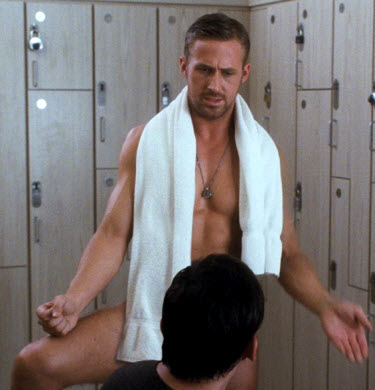
The common theme running through Crazy, Stupid, Love is people romanticizing the person they desire so much as to deify them. With that in mind, it’s easy to see why it’s so painful for the jilted parties. However, this is no mopey affair. Like most of us, these people do ridiculous things while dealing with their emotions. It’s a ridiculousness we can relate to. We’ve been there. Maybe, we’re there now. At the very least, we’ve known a few people who are, or have been there. We laugh because we see our own silliness in the people on the screen.
At the end of the day, CSL is a romantic comedy. It actually does go through many of the machinations of other rom-coms. However, the numbers aren’t quite as visible here as they are in many of it’s kind. It’s well crafted, all the way around. We get wonderful performances across the board. The scene-stealers here are Bobo as Robbie and Marisa Tomei in a very interesting and hilarious role. It also helps that the ending is a bit ambiguous. When the credits roll nothing has definitively happened to say for sure whether it’s a happy ending or not. We can guess either way we like. Still, we cannot say for certain how things will turn out, much like our own lives.
Sunday, May 22, 2011
Chloe

Directed by Atom Egoyan.
2009. Rated R, 96 minutes.
Cast:
Amanda Seyfried
Julianne Moore
Liam Neeson
Max Thierot
R. H. Thompson
Nina Dobrev
Mishu Vellani
Meghan Heffern
David (Neeson) is a college professor who often travels for speaking engagements. None too pleased about getting older, he purposely skips out on a flight home so he doesn’t have to celebrate his birthday with his wife Catherine (Moore). She, of course, has thrown him a surprise party. Guss who’s surprised. She figures out he went to dinner with some young, pretty co-eds. Combine this with his flirtations nature and the fact he likes to keep up with his students through IMs and texts and the wife realizes she might not be in a monogamous relationship. It doesn’t help that hubby is pretty secretive about the e-conversations he’s carrying on. Then, there is the couple’s son Michael. He’s an ingrate who despises his mom for reasons only known to him. He ignores her rules, including having his girlfriend sleep over. Really, he just ignores her altogether. He only speaks to her when she confronts him. When this happens, it’s all profanity laced attitude coming from his mouth. By the way, mom is a highly successful doctor. Other than that, her existence is pretty miserable.
As luck would have it, Catherine meets Chloe (Seyfried) in a restaurant restroom. It turns out Chloe is a prostitute. She’s also about the same age as all those girls David shares his laughs with. Putting her newfound contact to use, she decides to hire Chloe to present herself to David as a student and see what happens. As for her Catherine’s relationship with her son, she does nothing but whine about it. Her real energy is focused on getting all the juicy details of her husband’s meetings with Chloe. From there, a Skinemax flick breaks out.
For the uninformed, Skinemax refers to the soft-core porn movies that cable network Cinemax became famous for in the 1990s. They mostly aired late at nigh, especially on Fridays and Saturdays. Do they still do this? I haven’t had the channel in years, but obviously I know way too much about this. Still, there is a point. Most of those flicks seems to rip off Fatal Attraction, Basic Instinct, or have a plot that is some sort of hybrid of the two. This one goes the Fatal Attraction route. Chloe does indeed turn out to be our psycho. Who she is fatally attracted to is a twist that’s not all that surprising. Titillating? Sure. Unexpected? Not really.
The problem is once Chloe’s nuttiness becomes evident, we can always guess her next move. We’ve seen this before. Most of the other movies we’ve watched like this, such as Obsessed and Basic Instinct 2 at least have the good sense to go so far over the top they’re teetering on the edge of the cliff. Those movies revel in their ridiculousness. They are really bad, but enjoyably so. Chloe tries to traverse a more “adult”, artsy-fartsy road. Sadly, it never escapes the shadow of its Skinemax roots. Julianne Moore is a fine actress. I’ve always enjoyed her work. However, her role here could’ve been played by one-time B-movie queen Shannon Whirry. Seyfried could’ve been replaced with any number of less talented but similarly attractive wannabes. Liam Neeson? Let’s just say his role doesn’t really require someone with the chops of Liam Neeson.
Like most of, if not all the movies Whirry actually starred in, there is a good deal of nudity. Also like those movies, the nudity is not there to accentuate the plot, but to grab attention away from a weak storyline. Seeing Moore and Seyfried in various stages of undress, often in the presence of one another, becomes the point of the movie instead of a part of it. The result is we have a wonderful cast doing their best to elevate material that can’t be lifted.
MY SCORE: 4/10
Friday, January 14, 2011
The Kids Are All Right

2010. Rated R, 106 minutes.
Cast:
Annette Benning
Julianne Moore
Mark Ruffalo
Mia Wasikowska
Josh Hutcherson
Yaya DaCosta
Eddie Hassell
Kunal Sharma
Zosia Mamet
Nic (Benning) and Jules (Moore) have built their loving family the new fashioned way. Many moons ago, each of the ladies was artificially inseminated, bore a child and at some point apparently prior to any of this, decided to marry each other. Their daughter Joni (Wasikowska), named after rock icon Joni Mitchell, has just turned 18 and graduated high school. She is on her way to college in a few weeks. Their son, Laser (Hutcherson), is 16. He seems to also be bright, but makes extremely poor choices in friends. For him, “the wrong crowd” is all wrapped up into Clay (Hassell), the Neanderthal he hangs out with. Clay seems destined to die a horrible death trying to perform a stunt for YouTube. Anyhoo, things are fairly mundane until the kids decide to find out who their biological father is, without their moms’ knowledge.
In short order, they discover their dad is Paul (Ruffalo), a local restaurant owner. Totally unaware that he actually has kids up to that point, he’s living the bachelor life. You see, he donated sperm 19 years ago and has since forgotten about it. Women throw themselves at him, including Tanya (DaCosta). She’s not only his “friend with benefits” but his employee, as well. Evidently, she doesn’t believe in bras. Of course, a slob like me would notice such a thing for obvious reasons. However, there’s more to it than that. Her bralessness, the afro she sometimes wears (yes, she’s Black), the seemingly no-strings-attached sex she has (with a White man, no less), mark her as a free spirit, a bit rebellious and alternative thinking. She’s a female version of Paul. Though she’s a minor character, she helps frame the movie. She is the embodiment of both his lifestyle and the opposing force he becomes to Nic.
For all intents and purposes, Nic is the patriarch of her family. She’s domineering, demanding and can’t stand that Paul has been suddenly injected into their lives. Her partner Jules appears much more the wife in a traditional sense. She’s been a stay at home mom at Nic’s behest. She’s searching for her own identity and feels neglected. The entire situation becomes volatile as Nic has frequent outbursts and increasingly drowns her sorrows in alcohol. The children grow to like Paul more and more with each visit and he becomes the first client of Jules’ fledgling landscaping company.
As is the norm when worlds collide and get turned upside down, everyone is confused by what’s going on and try to make sense of it all. To the film’s credit, so do we. Who’s right? Who’s wrong? Is there even a right and wrong? What does this mean? Are the kids, or the adults, really all right? This enhances our experience because we’re working our way through it with the characters. In the end, we’re not sure we have any answers. Still, we’ve had an interesting ride with a family not as dissimilar to our own as appearances would lead most of us to believe. That said, if you're religious, or other convictions make you scoff at the notion of a nuclear family headed by two women, you might not be willing to enjoy it.
Saturday, November 6, 2010
A Single Man

Directed by Tom Ford.
2009. Rated R, 99 minutes.
Cast:
Colin Firth
Julianne Moore
Nicholas Hoult
Matthew Goode
Ryan Simpkins
Jon Kortajarena
In 1962, George Falconer (Firth) is a college professor and gay man who becomes distraught when his partner of nearly two decades dies in a car accident. He contemplates suicide, finds comfort in the company of his friend/drinking buddy Charley (Moore) and is pursued by a rather persistent young man who also happens to be one of his students. Persistent is putting it nicely. He’s actually stalked, but since George never complains it’s all good.
We watch our hero in flashbacks to happier times with his mate, seriously consider sticking the gun from his desk drawer in his own mouth and squeezing the trigger, get interrupted, have a laugh with Charley or flirt with Kenny (Hoult), the stalker. This actually happens on a loop, so it seems as if we watch the same series of events play out repeatedly. Since we can tell rather early where this is all leading, it seems rather pointless..
Opportunities to really engage us go by the wayside. Yes, he’s a gay man in early sixties. There’s even a few hints that this is indeed a more intolerant time than our own, but nothing really relevant to the film. As I mentioned before, the young student stalks him which he brushes off. What we have is a situation based on obsession by the younger party and lust by the older with neither aspect really being explored. Even worse, the ethics of a professor seeing a student is never even brought into question.
There are some good things going on. George’s scenes with Charley are easily the best in the movie. They share memories, wine, laughs, even a sexual past. What makes these work is the empathy we feel for her. She’s been unlucky in love and clearly pines for a man she can never have in the way she wants.
Through it all, the actors turn in some excellent work. Firth is very good at showing his emotions on his face without over-emoting. It’s a nice, subtle performance. Julianne Moore is excellent. In the unsung role of Jim, the deceased lover seen only in flashbacks, Matthew Goode is also very good.
In the end, it’s a decent watch, but it doesn’t realize it’s full potential. The story is told in a manner suggesting we’re watching something important but never gets around to what that might be.
Subscribe to:
Posts (Atom)