Showing posts with label Orson Welles. Show all posts

Wednesday, July 2, 2014

The Ten Biggest Stars of Classical Hollywood


Hitchcock's World is a blog I've only recently discovered and enjoy visiting. John is passionate about movies, and about blogging which makes it a great place to hang out. He decided to start a blogging relay of his own and whaddyaknow? He picked me to be the first recipient of the baton. Aside from questioning his judgement (or is that judgment?) in partners for this race, I'm honored to have been chosen to start it off.

What is it about?

It's all about "The Ten Biggest Stars of Classical Hollywood." Rather than give my own spiel on what the rules are, I'll give you his:

What I have done is create a list of some of the biggest stars from the time period, complete with a case for why they belong on the list. I will pick another blogger to take over, and then he or she will select one option to remove. They will make a case for why that person doesn't fit before offering a replacement, also with a case for why they are a better choice. That blogger will then choose another person to take over, and the process repeats. As a tip you might want to make sure that whoever you choose to take over is someone you can contact, so that you can notify them they've been selected in order to keep the relay going. 

Keep in mind, since we're discussing Hollywood, the actors you swap in and out should have had at least a few roles in mainstream Hollywood productions released between 1930 and 1960. They don't have to be American, just as long as they fit that criteria.

Easy enough so let's get this started.

The list

Ingrid Bergman


Humphrey Bogart
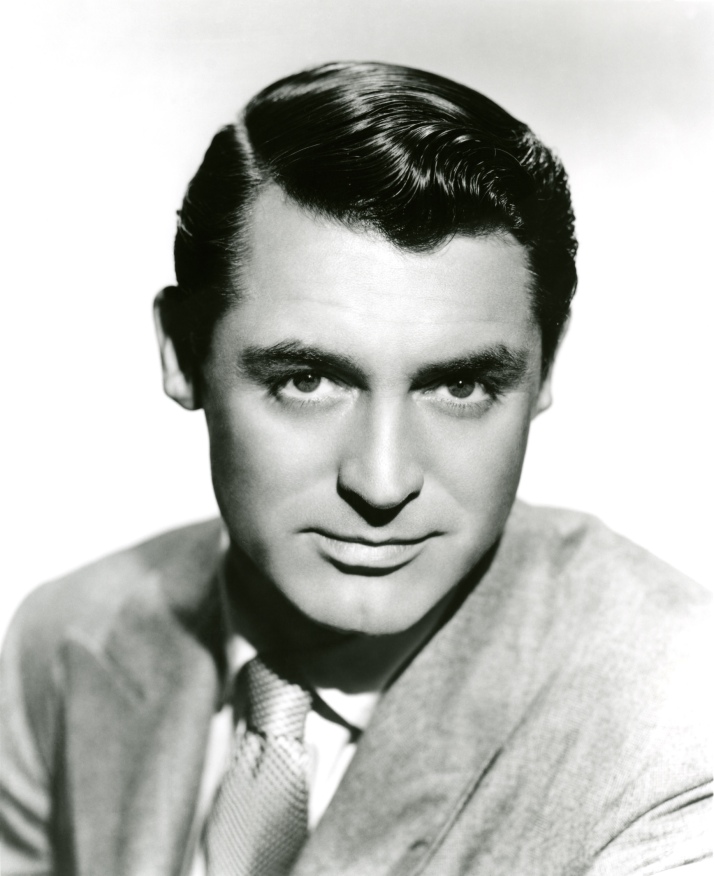

Cary Grant


Henry Fonda


Katherine Hepburn


Peter Lorre


Marilyn Monroe


Gregory Peck


John Wayne


Orson Welles


Scratched off:


Peter Lorre
As John noted in his original list, Lorre became the go-to-guy for villains and sidekicks. He is certainly one of the greatest character actors the world of movies has ever seen. However, he often wasn't one of the biggest stars in his own films. While it is true that us movie buffs know all about him, he's the kind of actor most people know they've seen "somewhere" before, but may not be able to pinpoint where. They certainly don't know his name. Is he an essential actor? Most definitely. Is he one of Classical Hollywood's biggest stars? No.


Penciled in:

James Cagney
For starters, Cagney is credited by many as giving birth to modern acting. None other than Orson Welles called him "maybe the greatest actor to ever appear in front of a camera." In Hollywood's transition from silent films to talkies, he was a giant cog, giving some of the first powerhouse performances of the sound era. His list of iconic roles is as long as my arm. As an added personal bonus for me, what he accomplishes in The Public Enemy and White Heat still blows me away. Any list of the era's finest must include Mr. Cagney.


Since we're talking Classical Hollywood, there is only one thing for me to do. That's passing the baton to Josh of The Cinematic Spectacle.

Monday, June 7, 2010

Citizen Kane


Directed by Orson Welles.
1941. Not Rated, 119 minutes.
Cast:
Orson Welles
Joseph Cotten
Dorothy Comingore
Ray Collins


In an attempt to come up with a fitting eulogy for the famous and wealthy Charles Foster Kane (Welles), a group of reporters investigate the man’s life hoping to discover the meaning of his last, dying word – rosebud. Many believe this film to be a thinly veiled commentary on the life of William Randolph Hearst. This includes Hearst himself who then set out to destroy the movie. On the surface, it tells a great story of a man consumed by his own ego. The metaphors are just explicit enough to let you know there’s more beneath the surface. Somehow, despite its age it still feels fresh. That’s mainly because this movie pioneered techniques still in vogue today. The easiest of these to spot is the non-linear telling of the story. It jumps back and forth in time often and effortlessly without ever blatantly putting a date on the screen. The most subtle of these innovations and perhaps most effective is Welles’ use of the camera. He simply does things directors today still aren’t as proficient at implementing and directors of his era, or viewers for that matter, had never seen before. He positions the camera and moves it in such a way that doesn’t merely suggest a mood, it forcefully puts you there. He’s particularly brilliant when using low angles. To help you better understand I’ll use Michael Bay's Transformers as a reference point. In that movie there’s the now famous scene of John Turturro being “lubricated” by one of the giant robots. At that moment director Michael Bay, and/or his cinematographer basically have the camera on the ground, or close to it, looking up at the two characters. Turturro looks large and authoritative standing over the camera. Picture yourself as a small child being scolded by a parent towering over you. Behind Turturro is the robot who is substantially larger and again appears even more so with the camera below him. When he “lubricates” Turturro not only is it funny but the director suggests to you that human authority figures are meaningless in an epic battle for the universe. Well, meaningless at that particular moment. In CK there’s a scene where Kane walks across the room and slaps his wife. During that scene the camera is positioned seemingly about knee-level in the middle of the two. As he walks toward her, not only does she retreat but the camera does as well. It seems to drift to the farthest right corner of the room and lower to the floor. The effect is Kane appears to grow physically becoming more and more menacing by the second while she and you as the viewer seem to shrink and get weaker. You actually feel as if you’ve been backed into a corner. Nothing suggestive about it, Welles shoved you in that corner. That may be too technical to digest and you probably won’t notice it but you’ll feel it. Things like that are why CK will always be studied by prospering directors but that’s enough film-school. The one thing that does make it feel dated, aside from the black-and-white picture, is the dialogue will occasionally sound a little cheesy or a little too polite for what the character is actually trying to say. Other than that it does everything well and my favorite part, of course, is it gives us an ending we can interpret a number of ways.