Tuesday, June 25, 2013

How to Survive a Plague

Directed by David France.
2012. Not Rated, 120 minutes.
Cast:
Bob Rafsky
Larry Kramer
Jim Eigo
Iris Long
David Barr
Mark Harrington
Bill Bahlman
Gregg Bordowitz
Dr. Ellen Cooper
Franke-Ruta Garance


In the late 1970s, AIDS became a known disease and it seemed to only affect gay men. By the early 1980s it had become an epidemic and a death sentence for the stricken. Hundreds of thousands of people were dying around the world on an annual basis. The development of effective medication was slow. How to Survive a Plague is the story of a group of activists, collectively known as Act Up, who fought to expedite the process.

The people of Act Up diligently filmed seemingly everything they did. As a result we get a documentary that tells its story mostly through actual footage, relying very little on interviews and less prone to the possible misrememberings of the people involved. There is not only video documentation of their rather public protests and run-ins with public figures, but of many of the group’s private meetings. This is where the movie’s real power lies. Though it is present, this isn't another documentary built upon a bunch of seniors reminiscing on the good ol’ days.

In this case, the ol’ days were actually pretty bad. The situation was bleak and spreading as the world slowly came to realize anyone could become infected with AIDS. Act Up formed out of a mass sense of urgency. That urgency is poignantly conveyed by the use of all that footage I mentioned. We see on the faces, and hear in the voices of the people involved, real emotion, real passion for the work they’re doing. It’s hard for the viewer to not root for them. Also helping in that regard is an ominous ticker that marks the passing of each year by displaying how many people had died of the disease to that point.

During the course of the movie, we’re introduced to a number of dynamic personalities. Some of these people have succumbed to the disease and are no longer with us. Nonetheless, we can understand why these folks became leaders of a movement. We see how much their lives, and in some cases, their deaths impacted the community and their cause.


Perhaps best of all, we learn that Act Up and its leadership weren't always right and they most certainly were not always operating in harmony. We see rifts form within the organization, even to the point some very prominent members of the group break off and do their own thing. Among those that remain, we witness more in-fighting as their best efforts seem to be going for naught and they try to come up with new strategies. It eventually comes to light that the sheer panic that drove them in the early days led them to push for things that may not have been all that beneficial.

The movie ends in 1996 after a major medical breakthrough. Despite growing up in New York City, where the group was based, much of this happened on the very edges of my periphery awareness. This is particularly true of the stuff from the 80s as I was very young and had only the knowledge of AIDS that most regular junior high and high school kids of that era possessed, which isn't much. I heard about AIDS protests in the city, but not much more than that they happened. From this outsider’s point of view, it seems two topics are wholly missing from Plague. This first is how basketball legend Magic Johnson contracting HIV affected their cause, if at all. Magic’s announcement marked a tectonic shift in the way many people though about the disease. He himself, become a crusader for finding a cure and joined a presidential committee. Did any of this matter to Act Up? Did it help them, hurt them, or neither?

The other topic is the country’s, even the world’s, changing outlook on and attitude toward homosexuals and homosexuality. From the time AIDS was discovered until ’96, I’d like to think the world became a bit more enlightened and/or tolerant. Again I’m left wondering how the people of Act Up felt about this. Granted, the main point of the movie is their battle for effective medication, but those things could easily fit into the narrative.

Despite the absence of these issues, Plague is still an enthralling documentary. Its story is very well told. It is also a reminder that even though AIDS isn't the immediate nailing up of the coffin it once was, it’s still out there and plenty of people continue to die from it. That said, this showcases a remarkable group of human beings who helped make the world a better place.

Monday, June 24, 2013

Killing Them Softly

Directed by Andrew Dominik.
2012. Rated R, 97 minutes.
Cast:
Scoot McNairy
Ben Mendelsohn
Slaine
Vincent Curatola
Max Casella
Trevor Long
Linara Washington

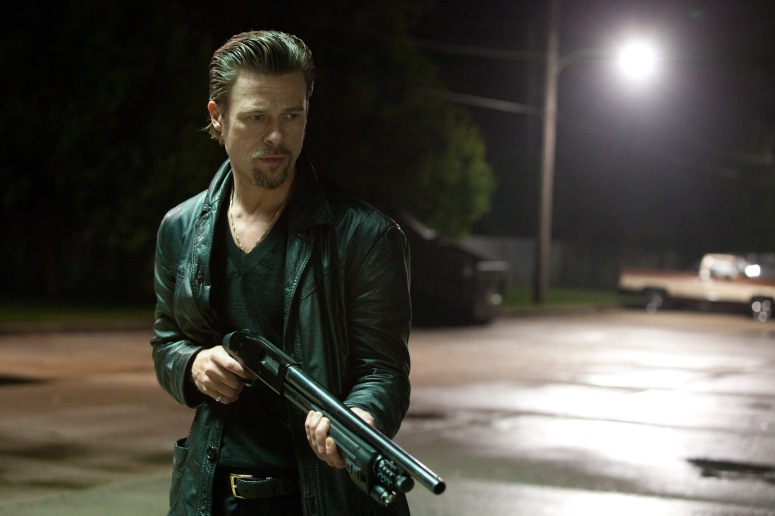
When a mob run card game gets robbed, the local economy is severely affected. It pretty much comes to a halt and won’t get going again until the people responsible are dealt with. And I don’t mean by the police, either. This is where enforcer Jackie Cogan (Pitt) comes in. He promptly gets to work figuring out the issues. Of course, his taking any action requires permission he has to work through his unnamed liaison (Jenkins) to get. Meanwhile, we also watch the schmucks who did it assess the situation from their point of view.

Brad Pitt is excellent in the lead. He hits every note perfectly. His cold-blooded arrogance is difficult to look away from. The supporting cast, mostly of sporadic screen-time is wonderful, as well. Each one makes us feel what’s at stake for them more than just by the words they speak. Of course, two characters never fully understand the potential consequences, but we feel that too. There is one performance that stands head and shoulders above the rest, though. James Gandolfini as overly seasoned vet hit-man Mickey is absolutely fantastic. He’s a very bad guy with a bad attitude and some serious personal problems. Somehow, the actor crafts him into someone we feel sorry for in spite of who and what he is. He commands your attention whenever he’s on screen, even away from Pitt.


This is not a movie heavy on action. However, what is there is visually arresting. Unfortunately for him, Markie (Liotta) is on the receiving end of two of these scenes. One is spectacularly brutal and the other is an amazing slo-mo sequence. Other than that latter scene, all of the action has an real feel to it. I’ll admit to flinching once or twice.

As great as the performances and  the visuals are, the hardly concealed subtext has to be addressed. The movie is set during the financial crisis that marred the final days of George W. Bush’s presidency and set the table for Barack Obama’s. Just so you don’t forget this, political news is constantly used as background noise, either on television or radio. From time to time, the focus even shifts directly to it. It comes across as totally cynical and, perhaps, a way right leaning view on America. It’s possible I could be misreading the latter, but not the former. It’s fairly clear that everything happening on the screen is a metaphor for what went on in late 2008. In case somehow, after an hour and a half, you’re not so sure this movie isn't too excited about the country’s future, it’s last spoken line will confirm it for you. For some, it might decide whether or not you like the film.

For me, the last line doesn't dictate either as I figured out that was the movie’s outlook early on. Regardless of whether I agree or not, Killing Them Softly is a fascinating experience with a different take on the mafia and how it operates, presenting them more symbollically than anything else. I rather enjoyed it. Sadly, I was disappointed that despite the movie’s title, we never get to hear Roberta Flack’s nor The Fugees’, or anyone’s rendition of the classic song from which it is derived. Hmph.

(Note: I’m generally a little slow getting reviews up. Depending on what’s going on in real life, it usually takes me three or four days to write a review and get it posted, but it can be over a week. This is my hobby, not my job. Yet. I only mention this because I actually watched this and had the review hand-written a few days before the passing of one of this movie’s stars, James Gandolfini. He was an amazing talent that I’ve praised in other reviews and, of course, he IS Tony Soprano. That said, I really do think his performance in this movie is amazing and I’m not just saying nice things because he’s recently deceased.)


MY SCORE: 8/10   

Friday, June 21, 2013

Skyfall

Directed by Sam Mendes.
2012. Rated PG-13, 143 minutes.
Cast:
Bérénice Marlohe
Ben Whishaw
Ola Rapace
Bill Buckhurst


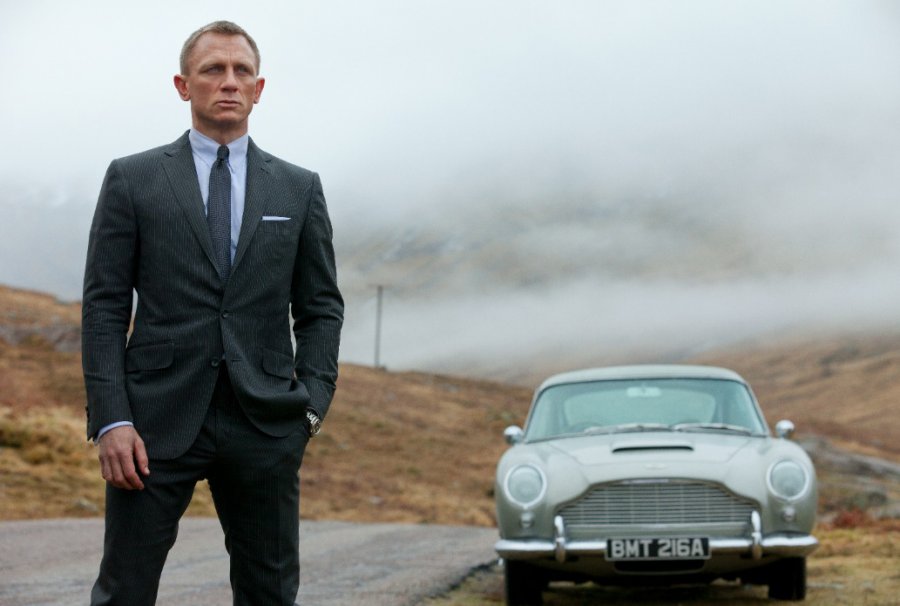
Skyfall opens with the death of James Bond (Craig), in spectacular fashion, of course. No worries, or spoiler alert necessary. His condition doesn't last long. After all, this is a 007 movie. You just can’t go killing him before the opening credits. Besides, both MI6 and M (Dench) are in great danger. Who else is gonna save the day? However, the genius of this movie is that it’s not really so simple as the hero saving the day, despite appearances.

Someone has stolen a list that reveals the identities of all of MI6’s undercover agents around the world and is fond of sending M personal, if cryptic, messages. This is a big problem, as you might imagine. The already difficult task of retrieving this list and/or tracking down the person responsible is made that much more so by the fact that our hero is suffering from fairly significant physical and emotional issues.

Beginning with Bond himself, extending to M, the entire movie is a dissertation on old vs. new. The franchise itself has long understood that its main character is a relic of the Cold War. He is even referred to as such in one of those abysmal Pierce Brosnan outings. Here, the point is driven home. MI6 is under fire from its own government for being antiquated and clinging to its old ways. We’re also reminded numerous times that Bond is not of this generation. His time seems to have past. As evidence, his edges are more frayed than ever before. Daniel Craig continues to play the role brilliantly, both as a man and a super-spy. With three 007 flicks under his belt, it’s debatable whether or not he’s the best Bond ever. It’s inarguable that his is the most human rendition of the character. And the actor is not alone on his quest to make this true. He’s been given scripts that not only allow him to bleed, but to actually feel.


No matter how much emotion our hero has to deal with, it couldn't be a great Bond movie without heart-pounding action and an eccentric villain. The action is terrifically ridiculous. All manner of vehicle is given a whirl, most notably trains. Lots of fun with trains. There’s lots of exciting hand-to-hand combat and plenty of shooting. Oh, and we have some rather large man-eating lizards. The only drawback in the action department is the best sequence opens the movie. We keep hoping something will top it, but none can. What happens with the helicopter during the last big set gets closest. Still, it’s all loads of fun.


As far as our bad guy, Silver, he’s gleefully played by Javier Bardem who brings his usual excellence to the role and has fun with it. Unfortunately, he may have a little too much fun. Silver comes off more amusing, if creepy and eventually pathetic, than menacing. True, he puts our hero into some harrowing situations. I’m just not so sure he inspires feelings of dread. That’s a bit disappointing since the same actor gave us one of this century’s most frightening film villains in No Country for Old Men.

Luckily for us, this is the rare Bond film that doesn’t sink or swim based on its bad guy. That’s because, at the end of the day, Skyfall is probably the most self-aware Bond film ever made. Of the three Daniel Craig entries into the canon, two of them are excellent. The first, Casino Royale, is a brilliant series reboot. Also self-aware, it purposely avoids the cheesiest and most over-the-top aspects of the franchise. Most noticeably, Bond’s gadgets, which the Brosnan flicks were overrun by, are nowhere to be found. In their absence we begin to delve into the psychology of the character along with the action. This is where some tenets of Bond, such as his love for scotch, are no longer seen as just things that a cool and manly super-spy does. Quantum of Solace, an incoherent mess, is the oddball. It’s somewhat enjoyable, but a far cry from its predecessor. Skyfall is a return to greatness. It continuously questions its own place in today’s world. It questions the way its hero and, by extension, the movie itself goes about its business. It even gives us a few gadgets, simultaneously paying homage to Bond’s glorious past and wondering whether they have any place in his future. Even M must face this same judgment, both explicitly by members of Parliament and within the film’s subtext. Much more than just another Bond flick, or an excuse to showcase shootouts and car chases, this is a movie that recognizes the status of its protagonist as a pop-culture icon and his battle to stay relevant.

Wednesday, June 19, 2013

Seven Psychopaths

Directed by Martin McDonagh.
2012. Rated R, 110 minutes.
Cast:
Tom Waits
Linda Bright Clay
Michael Stuhlbarg
Helena Mattsson
Kevin Corrigan

Marty (Farrell) is a Hollywood screenwriter and the world is anxiously awaiting his next masterpiece. He’s titled it “Seven Psychopaths,” but that’s pretty much as far as he’s gotten. His bestest buddy Billy (Rockwell) wants to help him write the thing and offers up some inspiration in the form of a story he heard in a bar and a newspaper article about an actual nut job, still at large, called the Jack ‘O Diamonds killer who goes around murdering members of the mob. Before long, real life intervenes when Billy’s “job” brings a genuine psychopath their way. He’s part of a dog-napping scheme with Hans (Walken). The two snatch up some poor unsuspecting canine then later return it to the owner for the reward money. It just so happens that their latest acquisition belongs to local gangster Charlie (Harrelson). Let’s just say he’s not planning on paying to get his dog back.

From the outset, we realize this is going to be a hyper-violent comedy. That the scenery will be blood-soaked is a given. The question is whether or not it can maintain the humor aspect. Thankfully it does, for the most part. Writer-director Martin McDonagh, who gave us the incredible In Bruges, crafts a script that’s borderline self-parody. It echoes sentiments others may have about his own work or of these sorts of movies, in general, purposely and sarcastically reinforcing them. Most noticeably, this includes apparent misogyny. Through other characters questioning Marty on his handling of his female characters, it becomes McDonagh fielding questions from critics. Through the course of the movie, his answer seems to be a defiantly waved middle finger. This doesn't make what happens pro-feminist in any way, but makes it easier to take because we sense the movie is aware of what it’s doing and simply trying to push our buttons.


The actors themselves also help push our buttons. Pulling off the delicate balance between graphic violence and snarky humor always requires strong performances. This movie has them in spades. The constant banter between Farrell and Rockwell works wonderfully as both men turn in stellar work. To compliment them, Woody Harrelson and Chrisopher Walken absolutely steal every scene either of them are in. This keeps the movie moving along at a snappy pace. Between the action and these guys tearing up the screen, Seven Psychopaths is a hard film to take your eyes off.

The biggest drawback to SP is that, at times, it feels overly influenced by early Guy Ritchie and Quentin Tarantino. This could very easily be mistaken as part of either director’s filmography (sans the British accents for Ritchie). Honestly though, McDonagh is a skilled enough filmmaker to make this is a good thing. More than just aping the movies we love, it stands alongside them as a sharp-tongued and mercilessly violent dark comedy that is at once absurd and sublime.

Sunday, June 16, 2013

Taken 2

Directed by Olivier Megaton.
2012. Rated PG-13, 92 minutes.
Cast:
Liam Neeson
Famke Janssen
Maggie Grace
Rade Sherbedgia
Leland Orser
Jon Gries
D.B. Sweeney
Luke Grimes
Kevork Malikyan


In case you've forgotten, Bryan Mills (Neeson) is a man with a very particular set of skills. He showcased them in the first Taken by killing a bunch of bad guys involved in the kidnapping of his daughter. It raked in all sorts of dough at the box office proving the world hasn't lost its penchant for Steven Seagal movies, so long as they don’t actually star Steven Seagal. This time around, the families of the deceased criminals want revenge against our hero. They descend upon Istanbul, where he is working – mostly at reconciling with his baby-mama Lenore (Janssen), herself going through a terrible break-up with her new hubby. Meanwhile, their still traumatized daughter Kim (Grace) hangs out by the hotel pool. She’s the last one to find out that mommy and daddy do indeed get taken. Of course, our hero manages to escape. Now he must work his way back to save his damsel in distress while also keeping his little girl safe.

In a continuation of the right-wing fantasies of its predecessor, itself a throwback to the 80s, Taken 2 does what it sets out to: show us Liam Neeson kicking Middle Eastern ass. Still, this aspect of the film is fun to watch regardless of your socio-political leanings because it is well executed action. Some of it is shot a little too tight for my taste, presumably to mask the star’s lack of athleticism, but it still looks good. Besides, the first thing most viewers will pick up on is that this is a guy trying to save his loved ones. Surprisingly, we take a little longer to get to the meat of the picture this time, but there’s still plenty of it.


Everything surrounding the action is generic, at best. It’s so much so, it feels like a copy and paste job from one of any number of movies. Most egregiously, it drops the ball on the easiest opportunity to build upon its predecessor and include some character development. We already understand Kim is still psychologically suffering from what happened not that long ago. However, being a teenager, she’s still upset when she finds out her old man used GPS to track her down at her boyfriend’s house, a guy he’s never met. Okay, fine. When she presses him on why he would do such a thing he sheepishly offers that he hears a lot of horror stories about things happening to young folks these days. Hears stories? Excuse me? What about the fact that I just recently had to go through hell and high water to rescue your taken ass? No mention of this? Sorry, but I would've had to lay into that ungrateful little…sigh. Let me take a deep breath.

Okay, enough about me. Suffice it to say the fact Bryan doesn't even mention the abduction both he and his daughter are still smarting from proves the people who wrote the movie have no passion for its story and view it as filler until the action starts. Why should we even pay attention when they can’t even be bother to make the hero seem like a real person. He wasn't a very deep guy the first time around, but there was something there. We felt for the guy. This time, he’s even more of a booming-voiced and unstoppable machine. Therefore, we have no reason to do anything other than doze off until we hear a loud noise.


MY SCORE: 5/10

Friday, June 14, 2013

End of Watch

Directed by David Ayer.
2012. Rated R, 109 minutes.
Cast:
Natalie Martinez
Jaime FitzSimons


Brian (Gyllenhaal) and Mike (Peña) are partners in the LAPD. Together, they patrol some of the meanest streets in Los Angeles. Having spent countless hours in a squad car discussing anything and everything, they've grown to form a brotherly bond. Brian is a bachelor who studies law and shoots video of everything. We view most of the film through his lens. Mike is married with a baby on the way. We follow the dynamic duo as they serve and protect. Eventually, some overzealous tactics find them interfering with the business of a Mexican Cartel operating in the City of Angels. Hazards of the job ensue.

The main strength of End of Watch is that we come to know these officers as well as they know one another. We’re privy to some intimate conversations that inform us how each guy thinks. We appreciate them for who they are and can understand the choices they make, even if we don’t always agree. Both Jake Gyllenhaal and Michael Peña help the process along with completely natural performances. We really feel as if we’re riding along with two cops on their day-to-day grind, passing downtime with both profundity and profanity. When off-duty, we even get to know their significant others: Mike’s wife Gabby (Martinez) and Brian’s girlfriend Janet (Kendrick). Even the other cops fit nicely into the story. Among these supporting players, look for America Ferrera who is very effective playing a role way off-type for her. It all helps create a well-rounded portrait of the two men at the eye of this particular storm.


Of course, watching a couple cops drive around in their squad car is only half the story. The more viscerally thrilling part is what happens when they’re actively fighting crime. These guys manage to stumble upon some really wild and gruesome scenarios. Some of them are more dangerous than others, a few of them heartbreaking, all of them heart-pounding. Though it all works itself into a coherent narrative, the plot doesn't dominate every waking moment as it would in most movies. It’s something that develops on the very edges of the peripheral awareness of our heroes. What they do know they don’t even take that seriously. This gives the story a more organic feel.

Unfortunately, some well-worn Hollywood tropes figure into our finale. While it is effective at making us sad, it’s still predictable. While I don’t find it to be quite racist, I might not argue with anyone who thinks otherwise. Point being, cinematic history certainly has its favorites which this movie doesn't deviate from. That said, the film creates a dilemma for itself. A slightly darker ending would likely be too cynical, a lighter one too easy. An inversion of what happens might be the braver conclusion, but less commercially viable. None of this is to say End of Watch is ruined by its climax. We’re still emotionally taxed by the last few frames. We've still had an enjoyable, if torturous, experience.