Sunday, July 13, 2014

Harrison Ford's Top 5 Characters


Happy Birthday Harrison Ford!

Today, one of the heroes of my movie going youth turns 72 years young. With some very recent critical acclaim and some rather big upcoming projects, the man is still going strong. Hopefully, he'll be all healed up from his injury soon so he can resume work on the new Star Wars flick. In the meantime, we might as well honor him by taking a look at his top 5 characters. Characters is the key word. These are not necessarily individual performances because, as many of you know, he's played several characters more than once. With that in mind, let's get started...


#5
President James Marshall
(Air Force One)
Obviously, I could have went a lot of different ways here. I chose this character because the movie he was in was truly all about him. Air Force One is such a fun, if at times goofy movie, and every bit of our enjoyment is due to Harrison Ford. And when he finally says "Get off my plane!" we can't help but cheer.


#4
Dr. Richard Kimble
(The Fugitive)
I absolutely love this movie. There really is no way around it. Anyone who tells me that Harrison Ford wasn't brilliant in this is either lying or crazy. His cat-and-mouse with Tommy Lee Jones is truly epic.


#3
Branch Rickey
(42)
Wait a minute...this? Ahead of his work as Dr. Kimble or Pres. Marshall? This? Yup. Here's the deal, I don't think 42 is a better movie than either Air Force One or The Fugitive, but Ford is better personally. If there's one character he truly disappears into, this one is it. The person, or persona, I think of when I hear the name Harrison Ford never surfaces during this performance. Not once.


#2
Han Solo
(Star Wars Franchise)
Okay, so you probably knew this one was coming. That doesn't make Han Solo any less iconic. And let's not forget cool. In fact, the biggest thing this character has going for him is that he's the coolest character in the Star Wars universe. Some of you are thinking "What about Darth Vader?" Answer this question for me: which one would you rather hang out with?


#1
Indiana Jones
(Indiana Jones Franchise)
Given my #2, there could only be one answer for the top choice. Indy is cool, especially under pressure, super smart, gets the ladies, and travels the world taking down archaeological terrorist. Oh, I almost forgot, he does it all with his hat on. For me, that last factor is enough to put him over the top. For you, I'll throw in the fact that Indy doesn't have to take a back seat to anyone and can save the world with or without help.


Well, there's my 2 cents on the matter. The man has credits going back almost 50 years so I'm sure I left a character out that you're just dying to tell me about. Feel free.


Friday, July 11, 2014

Earth to Echo

Directed by Dave Green.
2014. Rated PG, 89 minutes.
Cast:
Brian "Astro" Bradley
Teo Halm
Reese C. Hartwig
Ella Wahlestedt
Jason Gray-Stanford
Alga Smith
Cassius Willis

In Mulberry, NV, the government has been buying up houses to build a new freeway. A trio of tweenage boys who are bestest buds and about to separated by their families' moving become suspicious when all of the cell phones in or near Alex's (Halm) house go haywire. At the urging of Tuck (Bradley), their de facto leader and camera holder, they do some investigating without their parents' knowledge or consent. By the way, the third member of this band of adventurers is Munch (Hartwig), their tech expert, of sorts. Together, they find out that something more sinister is going on and it all has to do with their even more amazing discovery. They find a tiny, wounded extra terrestrial who they believe is trying to rebuild his spaceship so he can phone fly home. Eventually, they decide to call him Echo. As you might suspect, the boys try to help him out which leads them all over the deserts of Nevada. Along the way, they inadvertently pick up Emma (Wahlestedt), their school's "it" girl before continuing their quest.

If you noticed, I mentioned that Tuck is always holding a camera. More accurately, he sometimes wears one. That basically renders this to be a found footage flick, except for kids. His is not the only camera through which we see things, either. We switch back and forth between whatever Tuck is using, what Echo sees, and a more traditional camera. It probably deserves to be noted that even with the traditional camera we're usually given a first person viewpoint. This lends the movie a sense of urgency that carries it as far as it can go. Most often, shots are pretty tight, adding to that "you are there" feel. When we're seeing things from Echo's vantage point, the picture often freezes, jumps, and distorts. It's a very cool feature that also works in the movie's favor. In fact, all three distinct shooting styles combine to aid the story telling and propels the movie forward at a brisk pace.

Also helping things is the suspense of the early scenes when Echo is leading our heroes all over creation and into some tough situations to gather needed things. Most memorably, they wind up in one of those bars where you have to be at least fifty and have a felony on your record to get in. All of these scenes get fairly tense and build nicely atop one another. It helps foster the same sense of wonder as such 80s kiddie classics as E.T., and Goonies. Up to this point, we might find ourselves being hooked at the mere possibility of having a truly magical experience. Unfortunately, the movie never gets anywhere near reaching this potential. At every turn, it apes the style of Steven Spielberg. However, that's precisely the issue. Earth to Echo has all of Spielberg's style, but none of his substance. It walks and talks like a Spielberg flick, but doesn't really have a heart of its own. More importantly, it fails to get at ours.


The kids we're hanging with are problematic. None of them have enough personality for us to care about. To be fair, none of them are allowed the breathing room needed to carve out their own niche. Tuck just incessantly narrates with no real insight into the situation at hand while the rest just jump in with their two cents. An even bigger problem is that the same fate befalls Echo. He's clearly meant to be a modern incarnation of E.T., but is a far less interesting character. It doesn't help that he's a metallic, robotic thing. This automatically makes it more difficult to convey feeling. As primitive as E.T. was, he was clearly an entity of flesh and bone with a full range of emotions. Echo is a miniature, less charming R2-D2. It all adds up to us never really being invested in the quest of the people we're watching.

Once you get beyond the blandness of everyone on screen, what worked wonders early on begins to grate on us. All of those tight shots and the constantly switching viewpoints become a big problem. Because of sticking to this technique, we hardly ever see anything besides the face of whoever is speaking. It's meant to preserve the mystery, not reveal too much. However, it comes across as a bunch of people invading each other's personal space, and ours. Honestly, the film takes more of its visual cues from The Blair Witch Project than Spielberg, right up to and including one of our heroes giving a teary, snotty good-bye directly into the camera when he thinks he is about to die. The one real treat for our eyes, the one truly great shot, is part of an anti-climactic ending. It's rather literally "Wow, look at that!" The End. What a waste.

Earth to Echo checks off all the boxes in its attempts to become a new kiddie classic. The problem is that these are all superficial accomplishments. There is no depth, no soul behind  the slickness of all we're seeing (or not seeing). It just takes what it thinks worked in other, better films and tries to apply them here. Predictably, lots is lost in translation. It fails to make the same connection with us as the movie's it's copying. That said, it's still something kids likely enjoy. I watched this with a theater full of them on an excursion with the summer camp I'm working for. They all seemed to be having a grand time. Maybe I'm just getting old. Anyhoo, if you want to see a better Spielberg knock-off, watch Super 8.

Wednesday, July 9, 2014

Rush

Directed by Ron Howard.
2013. Rated R, 123 minutes.
Cast:
Chris Hemsworth
Daniel Bruhl
Olivia Wilde
Alexandra Maria Lara
Pierfrancesco Favino
David Calder
Natalie Dormer
Stephen Mangan
Christian McKay
Alistair Petrie
Colin Stinton
Julian Rhind-Tutt

In the mid 70s, two of the up and coming names in F1 racing are James Hunt (Hemsworth) and Niki Lauda (Bruhl). Making things more interesting for fans of the sport, they hate each other. That only makes sense considering they are polar opposites. Hunt is a tall, good looking guy who parties every night and obliges as many groupies as possible. Sure, he loves racing, but he loves the lifestyle it provides him with even more. Niki doesn't seem to have any friends at all, nor is he looking for any. He eats, drinks, and sleeps racing. His goal is to win the F1 championship every year for the rest of his life. Lots of animosity between the two, on and off the track, ensues.

Hemsworth is in fine form, turning in a wonderfully charismatic performance. He perfectly embodies everything about James Hunt. The most amazing part of his work is that we admire and pity him all at the same time. On some level, we want to be him, to be that carefree, that confident, that attractive. We also realize his existence is almost entirely superficial. The one bit of substance he has is his burning desire to defeat Niki Lauda. Aided by a great script, Hemsworth lets us see both the man's bravado and his vulnerability.

As Lauda, Bruhl also gives us the goods, albeit in a less flashy role. He makes the ultra-focused, but seemingly less interesting person, a fascinating specimen. We don't really like Lauda, but come to understand him. Despite Hunt's best efforts, he never becomes the villain. He just isn't the life of the party. Still, we come to admire him as well for his resolve and his passion to be the absolute best he can be. We just wish he were a nicer guy about it.


While the two guys keep our attention off the track, what happens on it gets our blood pumping. The races are beautifully shot and the conversations between the drivers and their teams helps us get inside the competitors' heads. When there are crashes, we fully comprehend that life is hanging in the balance. It all adds to the feeling that each guy, no matter his approach, is a daredevil risking it all each time he gets behind the wheel. That understanding is key to the movie. Without it, we cannot grasp the gravity of decisions made by each guy at crucial moments. These moments are not only crucial to the race they're in, or even just their careers, but their lives.

Instead of being your typical underdog story, Rush gives us two such characters and pits them against one another. That these two are championship material is never really in question. Our doubt, what keeps us on the edge of our seats, is whether or not they will destroy each other in the process. In the end, we realize that this is truly the story of James Hunt, however it could not be told without Lauda. Furthermore, when the credits roll we are still conflicted in our feelings about Hunt and his accomplishment.


MY SCORE: 8/10

Monday, July 7, 2014

Against the Crowd Blogathon: The Kubrick Klassick Worse Than a Michael Bay Flick


Last week, I decided to start a blogathon in which we bloggers get to rant against the popular opinion. The rules are simple:

1. Pick one movie that "everyone" loves (the more iconic, the better). That movie must have a score of at least 80% on rottentomatoes.com. Tell us why you hate it.

2. Pick one movie that "everyone" hates (the more notorious, the better). That movie must have a score of less than 30% on rottentomatoes.com. Tell us why you love it.

3. Include the tomato meter scores of both movies.

Easy-peasy, right?

Like some have expressed, it was easy picking out a movie I hated that most people loved. I can instantly name dozens of them. My first thought was to go with the movie that inspired the idea for this blogathon, Dallas Buyers Club. It didn't quite work for me. I figured that would be lazy since I just reviewed it a couple weeks ago. Besides,  I don't actually hate it. My next thought was The Tree of Life, which I did flat out hate, but I've also reviewed that. I decided to go with the movie The Tree of Life most reminds me of...

2001: A Space Odyssey

95%


I know. It's a classic. I know. It's one of the most influential movies of all time. I know. It's a groundbreaking cinematic achievement. I know. I know all that and there is lots more you want to tell me about this movie. Yawn.

I hate this movie.

More accurately, I don't think I've ingested enough mind-altering substances to fully appreciate it. To me, it was an excruciatingly boring experience. Five minute long shots of objects floating around are snore inducing and scream pretentious to me. Sure its got great visuals but do we have to dawdle on each one, forever? Put bluntly, there is no good reason this movie is nearly two and a half hours long.

None.

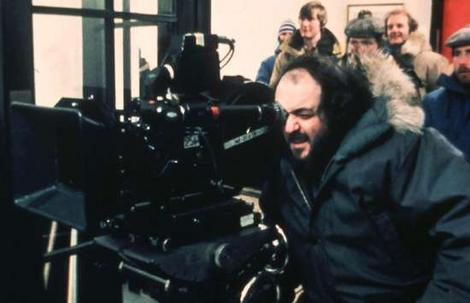
I understand fully what Stanley Kubrick was trying to do with this movie. Unfortunately, it just became a self-indulgent exercise in film technique. I cannot deny that the man gave us a number of iconic shots and even a much ballyhooed finale, it just should have gotten to the point a hell of a lot quicker. I mean like 90 minutes quicker. That's approximately how much time he spends in a circle jerk with the cinematographer and the composer. Again, these are beautiful pictures. I don't stare at pictures for longer than a few seconds no matter how great they are. It only takes a couple moments to figure out that it looks like the Mona Lisa's eyes are following you. No need to keep ogling the damn thing. If these shots are limited to a reasonable amount of time, you get the same story playing out in much less time and it is unquestionably the greatest short film ever produced. As it is, it's us watching a few guys practice making a movie.

Yup, I mentioned the composer. The score is a breathtaking piece of music. When paired with objects floating hypnotically about for what seems like hours it adds to the unbearable pretentiousness of it all. The sounds emanating from the speakers seem to be screaming "Look at this, it's some important shit!" It also becomes part of the giant sleeping pill that is this movie. I'm not even joking about this. It took me several attempts to get through this as it just dragged my eyelids toward the ground. I made my last attempt only after a very long and fulfilling nap. Even this was a struggle. Try this at home: put on any piece of classical music (no offense to classical music fans), grab any picture in your house, and stare intently at it for the duration of the piece you're listening to. Zzzzzz....

zzzzzz...cmmmp cmmmp... ...Ahem...where was I?

Oh yeah, watching 2001 was a thankless chore I'll make every effort to not repeat.

On the other hand, this is a movie I have and will watch repeatedly...

Bad Boys II
 23%


Yup, it's a Michael Bay movie. It's not just any old Michael Bay movie, either. It's pretty much everything us critics hate him for all rolled up into one noisy package. Everything and then some goes boom, the humor is crass, Gabrielle Union's supposedly seasoned vet FBI agent is reduced to a beautiful, but helpless damsel in distress, and yes there are a good deal of unnecessary slow motion shots.

You know what?

It works.

I enjoy the ridiculous shoot out with the Jamaican drug dealers. I have fun watching a truck full of cars being dumped all over the freeway as our heroes chase them down. I laugh hysterically when Martin Lawrence accidentally takes some Ecstasy. For two hours and change I forget Michael Bay subjected me to Armageddon, Pearl Harbor, and far too many Transformers movies.

The biggest reason for how enjoyable I find this movie is the chemistry between our heroes: Will Smith and Martin Lawrence. It was very good and helped carry the first Bad Boys. Here, it's taken to a few notches higher. Their back and forths are plain hilarious. Their ad libbing elevates Bay's juvenile humor to rib tickling art.

Now, I have to speak about my favorite scene.

Martin Lawrence's daughter is about to go out on her first date. When the lucky young man knocks on the door, he is greeted by an angry Lawrence and a liquor swilling, gun waving Smith. They scare the poor boy to death. Damn your meditative journey through mankind, your iconic score, and the sci-fi masterpiece they created. This shit is cinematic gold. My brother and I both have daughters that just became teenagers. We've vowed to re enact this scene at each others' houses.

Call us stupid.

Fear for our daughters' love lives.

Just don't tell me 2001 is better than Bad Boys II.

Sunday, July 6, 2014

Inside Llewyn Davis

Directed by The Coen Brothers.
2013. Rated R, 104 minutes.
Cast:
Oscar Isaac
Carey Mulligan
Justin Timberlake
John Goodman
Ethan Phillips
Robin Bartlett
Max Casella
Jerry Grayson
Jeanine Serralles
Adam Driver
Garrett Hedlund
F. Murray Abraham

It's 1961 in Greenwich Village, New York. Llewyn Davis (Isaac) is a down-on-his-luck folk singer. He has an album out that no one is buying, plays gigs here and there in local dives to make a few bucks, and sleeps on the couch of one friend or another every night. One of those couches belongs to loving couple Jean (Mulligan) and Jim (Timberlake). Jean spews endless streams of vitriol at Llewyn and continuosly declares her undying hatred of him. However, there was at least a short while where she let her guard down because she's just discovered she's pregnant and there is a possibility that the baby is his. In addition to this problem, he's lost the cat belonging to the Gorfeins (Phillips and Bartlett), another couple who lets him crash at their place from time to time. A rather interesting week ensues.

In true Coen Brothers fashion, we follow our hero on a series of misadventures as he continues to make a mess of his life. We get the sense he's been doing this for a good while. The fascinating part for us is trying to figure out whether or not he wants to fix it. Actually, that's not quite right. We're really trying to see how stubborn he is in trying to fix it his way before relenting and doing it the way others urge him. It's all a question of priorities and if Llewyn has them straight. Early on, shortly after Jean has told Llewyn she is pregnant, the two have a conversation discussing both the baby and the missing cat. By the end of it, Llewyn expresses more concern over the cat. Perhaps it's a defense mechanism kicking in after the verbal assault he suffers whenever Jean is within earshot. Maybe he is that far removed from reality that one situation is no more weighty than the other regardless of the consequences. This is what we're always trying to figure out with Llewyn. Eventually, we have to ask similar questions of Jean. As much as she hates Llewyn and proclaims her love for Jim, how is it possible the two ended up in bed together? What gives her the right to think that her decision making is any better than his? Nothing she does is above reproach. Are her tirades merely her own defense mechanism intended to disguise her true feelings?

The beauty of a Coen Brothers movie, and what makes them frustrating for some, is that even though they raise these questions they don't feel the need to explicitly answer them. They give us enough that we can argue about what we think those answers might be, but there really is no definitive right or wrong, just like in real life. In fact, this particular slice-of-life rings truer than most of the Coens' films because the situations Llewyn finds himself in are much more relatable than most of their other protagonists. He's a guy trying to make it as a musician and struggling badly. That's far more common than say, being chased around Texas by a relentless drug dealer wielding an oxygen tank, or a trio of escaped convicts becoming a renowned bluegrass band, or a pot-head trying to get money for a ruined rug from a millionaire he just happens to share the same name with. Don't get me wrong. Those are all great pictures, but not as grounded in reality as Inside Llewyn Davis.


Our star Oscar Isaac makes the whole thing work. That he's a guy determined to continue down the path he's on despite repeated failure is wholly believable. He sells us on the idea that no matter what, he knows better than you. He's going to do things his way and whatever happens happens. Because things aren't going so well with this method, there is an underlying anger to him that is consistently present. He only once berates someone. However, through Isaac's entire performance we get the sense that this is an angry, depressed little man. It seems his only joy comes from being on stage, but he can't get on enough of them to either satisfy his emotional need of them or to be able to afford a place to live. It also helps that he carries the musical performance aspect of his role really well.

Isaac isn't alone in giving us wonderful work, either. Mulligan is terrific speaking forcefully with every word exits her mouth. More than the words she says, the blunt look on her face while she does is what makes the character. The Gorfeins were played perfectly by Ethan Phillips and Robin Bartlett. Garrett Hedlund gives one of those performances that is quirky and great, but bound to be forgotten. Justin Timberlake gives a hard to judge performance. I don't hate him as an actor. In fact, I think he's usually not bad. Here, I didn't really like him most of the time. When he was performing music, it was a whole different story. Even here, you can see why he's become a pop music superstar. He has that little something extra that makes it impossible to take your eyes off him when he's working a song. Despite all of the stellar acting going on here, John Goodman steals the show as disabled, hard sleeping jazz musician Roland Turner. He is a vile person, often saying vile things, but he says them so eloquently it would be hard not to listen to him. It would be equally hard not to be pissed off at him. That's the magic of his character and Goodman pulls it off with ease.

When I first watched Inside Llewyn Davis, I wasn't quite sure how I felt about it. I mean I liked it, but I didn't know how much. I was a bit perturbed that the whole thing seemed to be just a set up for a cheap timeline trick which I won't spoil. I also had some thinking to be about that ending. I did the only logical thing I could and started writing this review. This helped me work through it, and recognize all the exquisite things going on, here. Coen Brothers films often have this effect on me. I see them and like them okay, but don't quite appreciate them until I spend some time putting some serious thought into what I just saw. Unlike most movies, theirs get better under scrutiny. This is no exception. Taken at face value, it's a movie you can easily forget. Once you start digging though, you start to unearth a bunch of treasures.

Friday, July 4, 2014

The Ten Most Influential Directors of All Time


John at Hitchcock's World has been a very busy blogger, lately. Just the other day, I participated in his relay for The Ten Biggest Stars of Classical Hollywood and he's got blogathons going, left and right. I've also been handed the baton to another relay John has started. This one for The Ten Most Influential Directors of All Time. The amazing Alex at And So it Begins... did the honors.

The rules are simple, but in case you don't know them, they go like this: From a pre-existing list, remove one person and replace them with another, explaining why on both counts. Then pass the list on to another blogger.

Ready on the Set...

Action!


Making the Cut

Francis Ford Coppola


D.W. Griffith


Howard Hawks


Alfred Hitchcock


Stanley Kubrick


Sergio Leone


Georges Méliès


Steven Spielberg


Martin Scorsese


Edited Out:

David Lynch
When I think of David Lynch, I think odd, quirky, unique, and maybe misunderstood. He is a man of vision with an unmistakable style. More of his cinematic flourishes seem purely of his own imagination than probably any other director I can think of. He doesn't merely make films, he experiments with the medium. However, I don't think of him as hugely influential. When it's all said and done, he will leave us a body of work that deserves to be studied for the rest of time. I just don't think there are a line of would be auteurs trying to follow in his footsteps.

Spliced In:

Quentin Tarantino
Whether or not Tarantino is one of the greatest directors of all time is open to debate. What is not debatable is the fact that he is highly influential. He's so much so that cinematic history can be split into two sections: Before and After Pulp Fiction. Until that movie came out, QT had been gaining recognition as a force to be reckoned with, a hot new commodity. After PF hit the screen, lots and lots of movies came out aping his style. He himself transparently ripped off paid homage to movies he loved as a youth and now directors everywhere do the same. The ultra-violent crime comedy is a genre he practically invented. Characters in every genre were suddenly more self-aware and more easily identifiable as part of the same universe as us viewers. They made references to all the pop culture things we know and love. They spoke with the same kind of snark and sarcasm as many of us, with at least as many four-letter words. That's as much a testament to his ability as a writer as it is to what he does from the director's chair, but it's all part of the package. A number of directors owe him their entire careers. More importantly, he single-handedly changed the cinematic landscape.


With that, I'm passing the baton to m. brown at Two Dollar Cinema. 


The  Relay So Far...


Wendell from Dell on Movies

Thursday, July 3, 2014

20 Feet from Stardom

Directed by Morgan Neville.
2013. Rated PG-13, 91 minutes.
Cast:
Darlene Love
Merry Clayton
Lisa Fischer
Tata Vega
Jo Lawry
Judith Hill
Stevvi Alexander
Mick Jagger
Lou Adler
Sheryl Crow
Bette Midler
Bruce Springsteen
Stevie Wonder

To most of us, back-up singers are just instruments to help our favorite artists sound better. We forget that these are living, breathing people with dreams and aspirations. Their hopes often involve moving from the side or rear of the stage to front and center. The reasons they didn't quite make it are varied. 20 Feet from Stardom focuses on a few of these talented individuals.

During they early parts of the movie, we meet a number of ladies who give us a bird's eye view of the American music scene as far back as the 1950s. In sort of a round robin of commentary we hear various stories about how the music industry has changed over the years, including the constantly fluctuating role of the back-up singer. Interspersed throughout are tales of the solo careers that didn't result in iconic status, and some of the reasons why. The most interesting of these is the absolute stranglehold legendary producer Phil Spector had on singer Darlene Love. It's a story that shines new, unflattering light on Spector and some of American pop musics most famous songs. There's also the "not sure why they weren't bigger" careers of Tata Vega and Merry Clayton, along with the more current struggle of Judith Hill. Ms. Hill's star seemed to be shooting upward when her talents were displayed worldwide during the broadcast of Michael Jackson's funeral.


The most intriguing person in all this is Lisa Fischer. She had a hit song or two in the late 80s and seemed on the verge of becoming a bona fide superstar. Instead of continuing down that path, she opted to go on tour withe the Rolling Stones as one of their back-up singers, where she's been since 1989. She's the lead back-up, mind you, but a back-up nonetheless. Why would someone for whom the planets appear to be aligning purposely not take the plunge? It's a fascinating question with fascinating answers. Most of us assume we would leap at the chance for fame and fortune if presented the opportunity to do so. Lisa Fischer is someone who didn't.

My one major issue with 20 Feet from Stardom is that men in the industry are almost totally ignored. To be sure, it is a female dominated profession. However, the boys are all but non-existent in this film. If that's the case in real life, then fine. Even so, that could be addressed. We get a short section on the late great Luther Vandross, who started as a back-up singer for David Bowie before becoming an R&B icon. Other than that, there is a male we often see singing. However, he is only afforded a few words of his own, and nothing is offered about his story.

I'm probably making a bigger deal out of the gender thing than is warranted. The almost absence of men just strikes me as odd. Still, 20 Feet is a fun watch, particularly for music lovers. We get lots of old clips of familiar faces being performed. Among the talking heads, it's not just the ladies tooting their own horns. We get plenty of producers, scholars, and even mega-stars like Mick Jagger, Bruce Springsteen, and Sheryl Crow singing their praises. It breezes by as we remember and sing along to the great music being played. Even if you're too young to know these songs it will be tough to keep from dancing in your seat.